




- Report Index
- World Economic Outlook (August 2026)
- Economic Trends
-
2026.08
World Economic Outlook (August 2026)
Yoshiki Shinke, Seiji Katsurahata, Osamu Tanaka, Toru Nishihama
1. Japan Economy
Current state of the economy: Recovery trend remains intact despite worsening conditions in the Middle East
Real GDP (Quarter-on-Quarter Annualized Rate, Contribution)
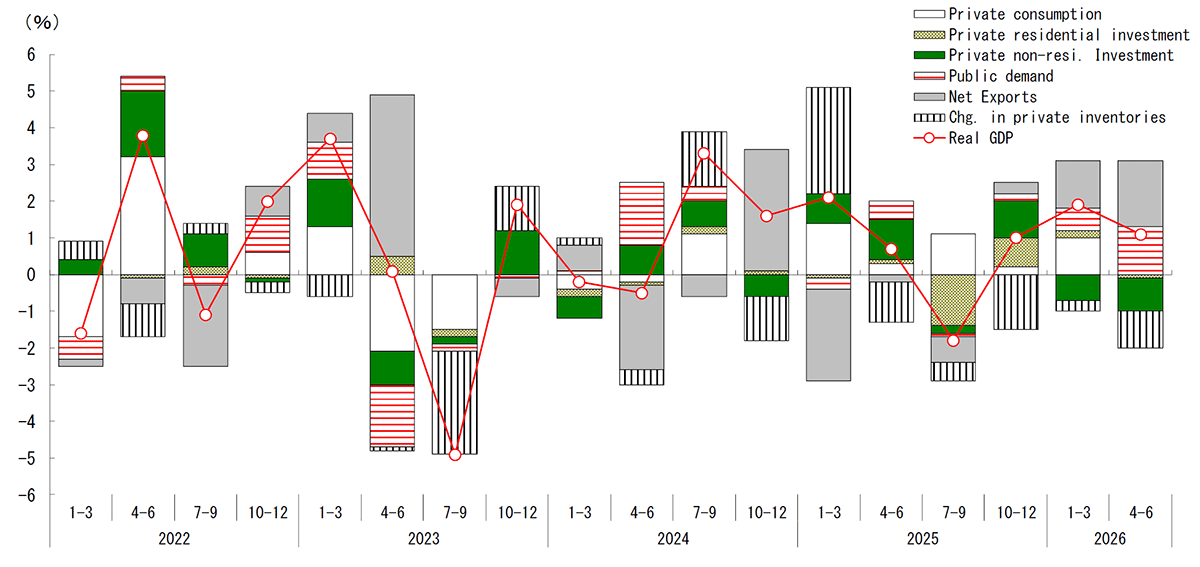
Source: Cabinet Office.
Real GDP growth in Q2 2026 (April–June, first preliminary estimate) came in at +1.1% on a quarter-on-quarter annualized basis (+0.3% quarter-on-quarter), marking the third consecutive quarter of positive growth. Although growth fell short of market expectations and the details were somewhat underwhelming, the fact that the economy maintained positive growth was nevertheless encouraging. This is particularly true given that Q2 followed relatively strong annualized growth of +1.9% in Q1 and coincided with a period when worsening conditions in the Middle East intensified headwinds from supply uncertainty, higher import prices, and deteriorating consumer sentiment.
Of particular importance is that severe supply constraints were avoided. As resource imports from the Middle East fell sharply, there were concerns at one point that shortages of crude oil, naphtha, and other resources could cause major disruptions to economic activity. Subsequently, however, the release of government stockpiles and progress in alternative sourcing from the United States and other countries prevented resource shortages from significantly constraining production activity. Expanding global AI-related demand also helped prevent a sharper downturn in the economy.
Although the deterioration in Middle East conditions exerted some downward pressure, including through lower exports to the Middle East and weaker business investment due in part to delays in construction projects, the economy as a whole remained resilient, with neither corporate nor household activity experiencing a sharp contraction. The fact that the economy maintained positive growth despite the significant shock from worsening conditions in the Middle East suggests that the Japanese economy has demonstrated resilience.
Economic outlook: Higher costs to weigh on growth, but recovery trend expected to continue
Japan's Economic Outlook (Yearly)
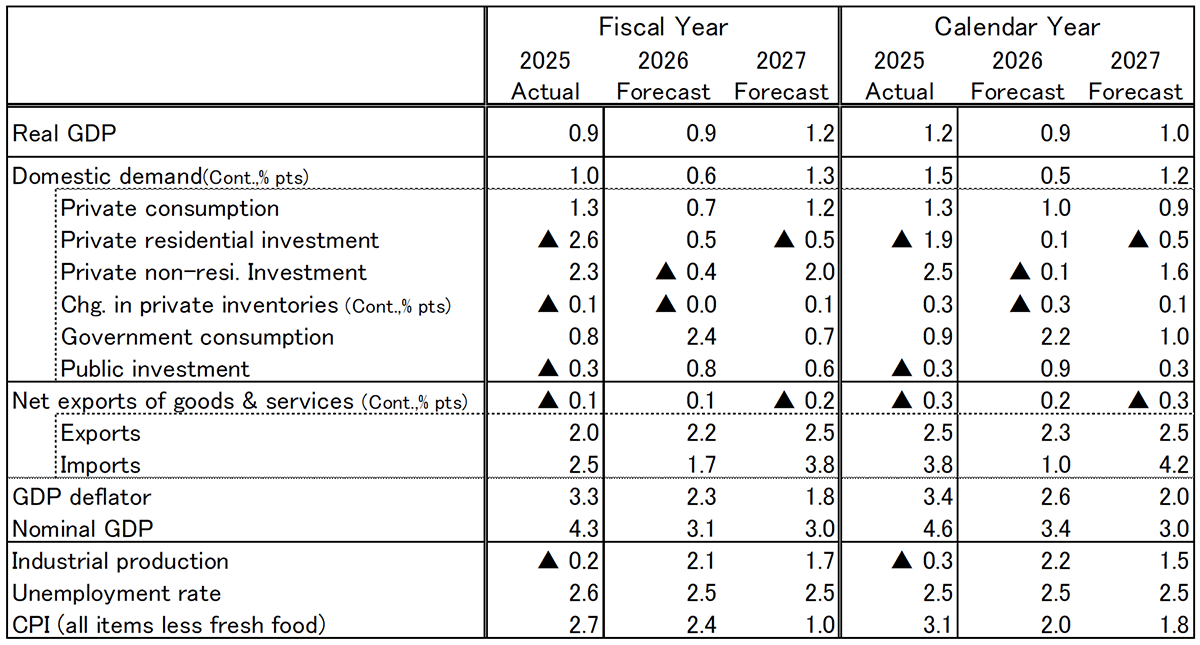
Note: Forecasts are by the Dai-ichi Life Research Institute.
Source: Cabinet Office, Ministry of Economy, Trade and Industry, Ministry of Internal Affairs and Communications.
Looking ahead, we expect the Japanese economy to continue a moderate recovery. However, the increases in import prices and upstream costs already resulting from the deterioration in Middle East conditions are likely to feed through to downstream prices with a lag. Higher prices for food, daily necessities, electricity, and gas will erode households’ real purchasing power, while higher costs will also put pressure on corporate profits. As a result, the pace of economic recovery is likely to remain subdued.
On the positive side, supply-side risks have receded substantially. The release of government stockpiles and progress in alternative sourcing by both the public and private sectors have reduced the risk that difficulties in securing resources will significantly constrain production activity. The easing of supply uncertainty is also encouraging, as it should make firms less inclined to postpone production and investment.
In the corporate sector, high corporate profits should provide some cushion against higher costs, while demand for labor-saving, digital, and AI-related investment remains firm amid persistent labor shortages. Overseas economies also remain resilient, and robust global AI- and semiconductor-related demand is expected to support exports and business investment. Reduced uncertainty as supply concerns ease could also prompt firms to move ahead with investment projects that had previously been postponed. In the household sector, meanwhile, strong wage growth and a resilient labor market should underpin private consumption. Although the drag from higher prices is unavoidable, a sharp downturn in consumption appears unlikely.
Taking these factors into account, although downward pressure from higher prices will remain, the economy is likely to maintain a moderate recovery trend in the second half of FY2026. We expect the focus of concerns surrounding developments in the Middle East to shift from “supply-side constraints” in the spring to “price and income effects” going forward.
In FY2027, the recovery is expected to gain momentum relative to FY2026 as the adverse effects of higher resource prices and procurement costs gradually fade. Business investment is expected to increase as the corporate earnings environment improves, while exports should continue to be supported by resilient overseas economies and AI-related demand. In the household sector, the fading of cost-push pressures, together with the reduction in the consumption tax rate on food products from April 2027, should boost household purchasing power and strengthen the recovery in private consumption. We therefore forecast real GDP growth to accelerate to +1.2% in FY2027, from +0.9% in FY2026.
2. US Economy
Current state of the economy: Strong Domestic Demand Resists Geopolitical Risks as Medium-Term Inflationary Pressures Ease
Domestic policy and international geopolitical uncertainties remain at extremely high levels as the Trump administration rapidly restructures trade and national security policies based on its "America First" agenda, including tariff hikes and strict enforcement against illegal immigration. In particular, escalating tensions in the Middle East and the de facto blockade of the Strait of Hormuz have disrupted supply chains and driven up crude oil prices, keeping them volatile. Nevertheless, the US economy continues to show robust resilience, supported by rapid expansion in IT investment, primarily in AI-related sectors.
Real GDP growth for Q2 (first estimate) slowed to +1.5% QoQ annualized (+2.1% YoY), down from +2.1% QoQ annualized (+2.7% YoY) in Q1. However, despite the headline deceleration, domestic demand actually gained momentum: real private domestic final purchases accelerated sharply to +3.9% QoQ annualized (vs. +1.7% in Q1) and real domestic final purchases rose to +3.1% (vs. +2.2% in Q1), driven by solid personal consumption and capital expenditure.
This expansionary trend has carried over into Q3. In July, both the ISM Manufacturing PMI—rising to 55.6 (from 53.3 in June)—and the ISM Non-Manufacturing PMI—rising to 54.1 (from 54.0 in June)—pointed to accelerated growth across both sectors. Meanwhile, in the labor market, nonfarm payrolls turned negative in July, falling by 23,000 month-on-month (after a 20,000 gain in June). This contraction, however, was mainly driven by temporary factors, including a sharp drop in local government education employees due to seasonal adjustment distortions and a payback effect following special event demand from the North American FIFA World Cup. Given that the unemployment rate remains low, this does not signal a sudden economic downturn.
In July, core CPI remained sticky at +2.5% YoY (vs. +2.6% in June). However, on a 3-month annualized basis, it slowed to +1.6% (from +2.3% in June) and on a 6-month annualized basis to +2.4% (from +2.6% in June), indicating that medium-term inflationary pressures are waning. This suggests that underlying inflation has resumed its downward path toward the Federal Reserve's 2% target.
At the July 28–29 FOMC meeting, the Federal Reserve decided to keep the target range for the federal funds rate unchanged at 3.50%–3.75% for the fifth consecutive meeting. However, the decision was approved by a 9–3 vote, compared with a unanimous 12–0 vote in June. Three regional Federal Reserve Bank presidents—Beth Hammack (Cleveland), Neel Kashkari (Minneapolis), and Lorie Logan (Dallas)—dissented, calling for an immediate 25-basis-point rate hike. The last time three policymakers simultaneously dissented in favor of tighter policy was at the September 20–21, 2016 FOMC meeting, making this a rare occurrence in nearly a decade.
US labor situation
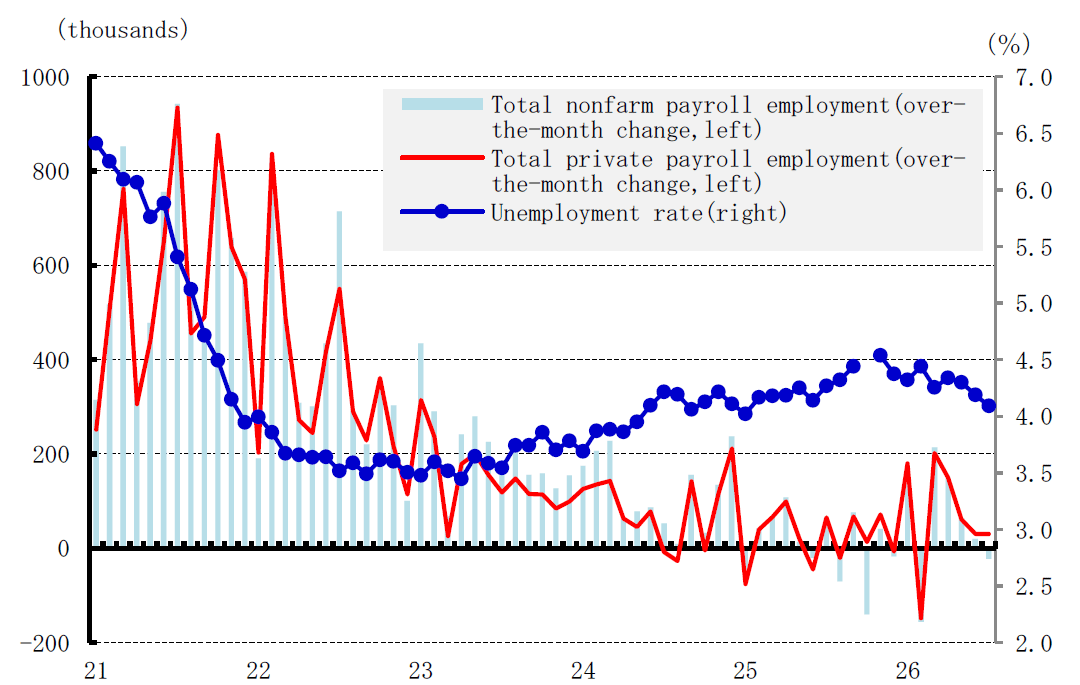
Source: US Department of Labor.
US core CPI
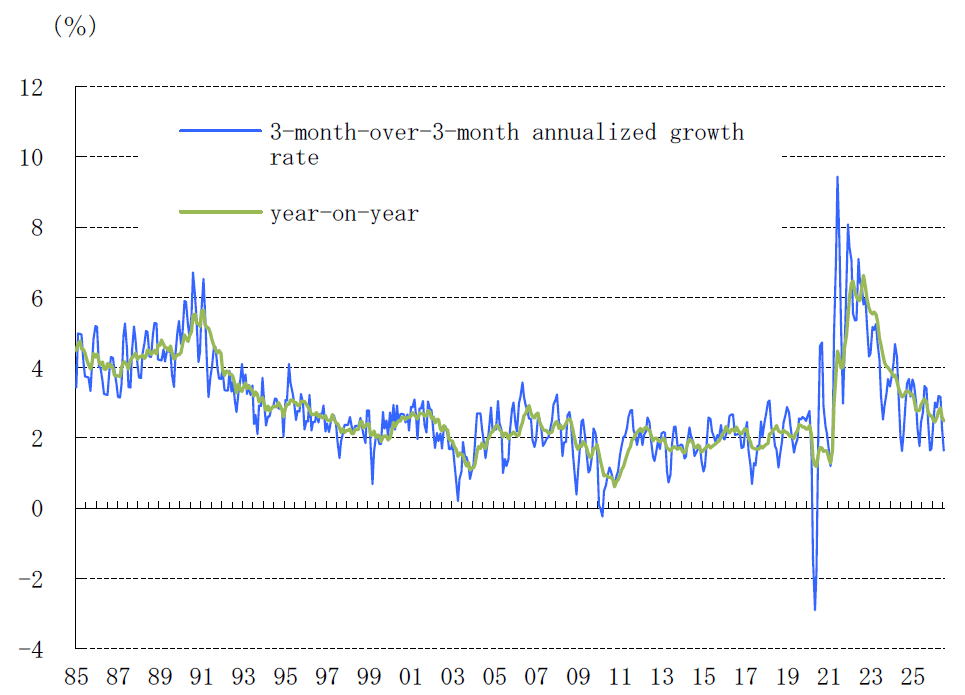
Source: US Department of Labor.
Economic Outlook: Growth Expected to Remain in the 2% Range in 2026
Looking ahead, aggressive fiscal policy is expected to more than offset the drag from tariff measures and support U.S. economic growth. Following the February 2026 Supreme Court ruling that declared tariffs under the International Emergency Economic Powers Act (IEEPA) illegal, the administration transitioned to Section 122 of the Trade Act of 1974 (a blanket 10% tariff). Upon the expiration of Section 122, tariffs transitioned to Section 301, bringing the effective tariff rate down to approximately 7.1% as of June 2026—a steep decline from roughly 14.4% in 2025 (compared to 2.4% in 2024). As a result, the negative impact on real GDP growth is estimated to be limited to 0.1–0.2 percentage points (down from ~0.5 percentage points in 2025).
Conversely, the One Big Beautiful Bill Act (OBBBA), enacted on July 4, 2025, will provide strong fiscal tailwinds. While extending key provisions of the 2017 Tax Cuts and Jobs Act (TCJA) and introducing new tax relief measures, the law also incorporates spending adjustments, including cuts to social safety net programs alongside increased outlays for national defense and border security. Although certain measures took effect in 2025, the effects of the tax cuts are expected to peak in 2026, boosting households' real disposable income and supporting consumer spending. Furthermore, investment tax incentives are expected to spur business fixed investment. Together, these fiscal measures are projected to boost real GDP by 0.4–0.8 percentage points, comfortably outweighing the drag from tariffs.
For full-year 2026, the US economy is poised to sustain solid growth, bolstered by the reopening of federal government operations and the aforementioned tax cut effects. Personal consumption is expected to remain firm; despite headwinds from higher prices, spending will be supported by wealth effects from rising equity and real estate valuations, as well as higher net incomes due to tax relief. Business investment growth is also set to accelerate, driven by tax incentives, expanding IT demand fueled by the rapid adoption of generative AI, reduced uncertainty following trade agreements, and increased direct investment. Additionally, trade agreements are expected to boost exports of agricultural goods and energy.
In light of these factors, the US economy in 2026 is highly likely to expand at a pace above its potential growth rate, maintaining a solid +2.2% full-year growth rate. In the labor market, conditions are expected to remain stable, with the unemployment rate staying below 4.5%. On the inflation front, while housing costs should continue to moderate, overall inflation is likely to edge up gradually as higher crude oil prices and tariff costs incrementally pass through to downstream sectors. In this environment of resilient growth alongside persistent inflation, the Federal Reserve is expected to maintain a hawkish pause throughout 2026.
US economic outlook (YoY, %)
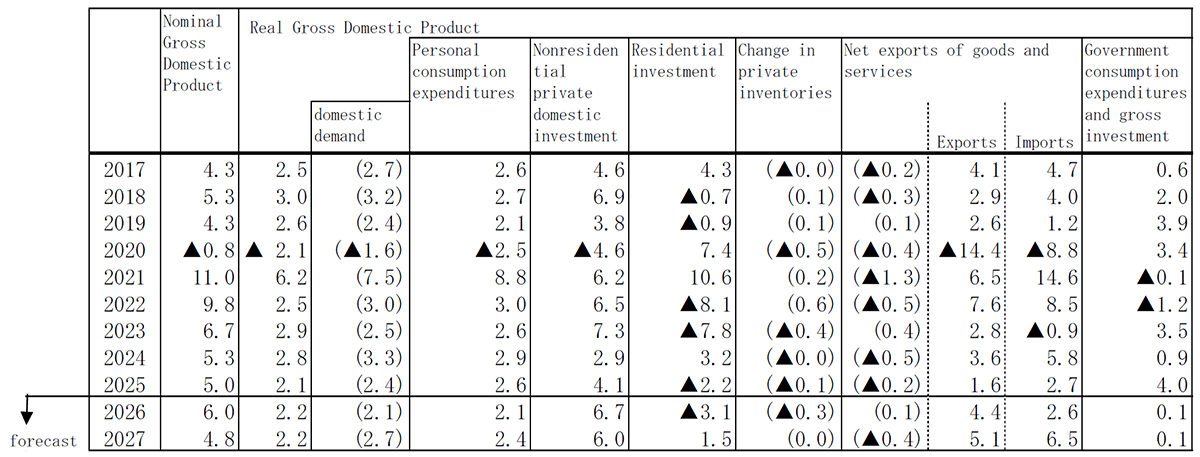
Note: Forecasts are by the Daiichi Life Research Institute.
Source: US Department of Commerce.
3. Eurozone Economy
Current State of the Economy: Steady Expansion Continues, but Facing Headwinds from Extreme Weather and High Resource Prices
The eurozone economy continues to expand modestly, despite headwinds such as US tariff hikes and Germany’s structural weakness. The resilience of the economy is underpinned by: (1) the avoidance of a tit-for-tat exchange of punitive high tariffs and retaliatory measures through trade negotiations with the US; (2) the recovery in households’ real purchasing power, driven by the easing of historically high inflation and wage rises; (3) the continued provision of fiscal support through the Recovery Fund, particularly to countries in Southern and Central and Eastern Europe; and (4) the shift towards fiscal expansion by Germany, which had maintained a policy of fiscal austerity for many years. By country, whilst the recovery in Germany—the eurozone’s largest economy—remains lacklustre, Southern European countries such as Spain, Greece and Portugal, which were once plagued by debt concerns, are driving economic growth.
This economic resilience is now facing new headwinds in the form of extreme weather and high commodity prices. In Europe, heatwaves and droughts persist, with water levels in the Rhine and Danube rivers falling to record lows. The Rhine is a vital artery underpinning Germany’s industrial production and logistics, with its catchment area home to numerous industrial facilities—including chemical and steel plants—as well as thermal power stations. The Danube underpins logistics in Central and Eastern Europe, handling the transport of large volumes of grain, fertiliser and raw materials. Should the low river levels persist, there is a risk that the impact on the real economy will widen further, including restrictions on the loading and operation of cargo ships, rising transport costs, and output curbs at power stations due to a shortage of cooling water.
The surge in commodity prices caused by the escalating tensions in Iran is also exerting new downward pressure on the eurozone economy. The Middle East accounts for only a limited proportion of Europe’s crude oil and natural gas imports, and the impact of a blockade of the Strait of Hormuz would mainly be felt through rising international energy prices. Since the start of the air strikes, crude oil prices have risen to levels comparable to those seen following Russia’s invasion of Ukraine, whilst the rise in natural gas prices has remained more limited than during the 2022 energy crisis. Consequently, the impact of energy prices on consumer prices is not as significant as it was during the previous period of high commodity prices.
In response to rising energy prices, the European Central Bank (ECB) began raising interest rates at its June governing council meeting. Since then, it has kept its policy rate on hold whilst remaining vigilant regarding companies’ efforts to pass on price increases and wage rises. Although uncertainty surrounding the situation in Iran persists, the secondary effects of rising energy prices on wages and service prices have so far been limited, and it is unlikely that a significant tightening of monetary policy, such as that seen during the previous rate-hiking cycle, will be required.
Euroarea Real GDP Growth (SAAR)
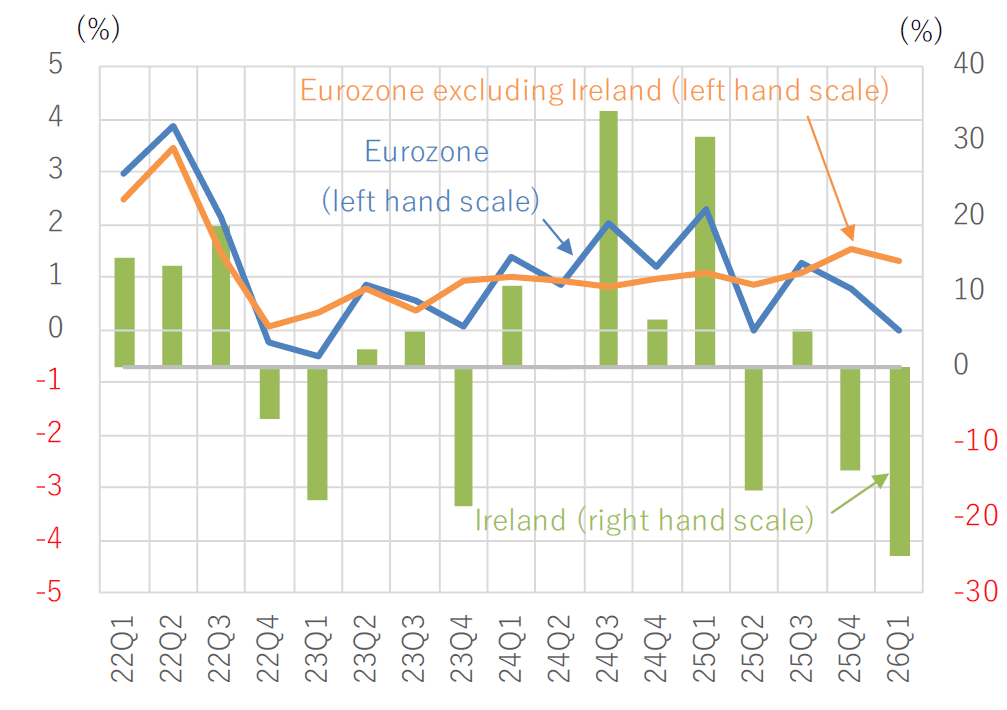
Source: Eurostat, Daiichi Life Research Institute.
Euroarea Harmonised Index of Consumer Price (YoY)
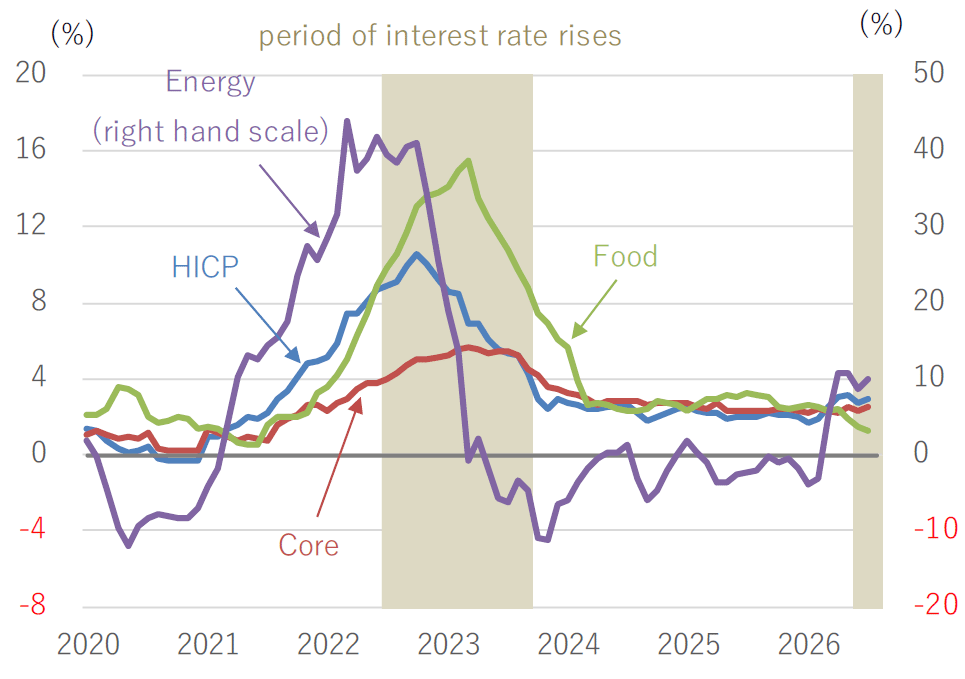
Note: Core inflation excludes energy, food, alcohol and tobacco.
Source: Eurostat, Daiichi Life Research Institute.
Economic Outlook: Moderate Growth Supported by Fiscal Expansion
Looking ahead, whilst extreme weather and higher energy prices are expected to weigh on economic activity, fiscal expansion and increased investment will underpin the economy, and the eurozone is forecast to continue growing at a moderate pace. Growth is set to be supported by Germany’s fiscal shift and the full-scale expansion of defence spending across European countries, as well as the resilience of the Spanish economy—driven in part by immigration—and increased investment in renewable energy, artificial intelligence (AI) and defence-related sectors.
The Recovery Fund, which has underpinned economic expansion in Southern and Central and Eastern European countries, will cease providing new financial support at the end of the year. Given the ongoing rush of last-minute applications ahead of the scheme’s conclusion, and the time lag between the receipt of funds and the actual generation of investment and demand, the boost to the economy is expected to persist to some extent beyond 2027. Furthermore, the structural reforms that were a condition for receiving funds from the Recovery Fund are also expected to enhance medium- to long-term growth potential through measures such as productivity improvements.
Defence spending is set to become the new pillar of fiscal expansion, replacing the Recovery Fund. To enhance member states’ fiscal capacity to strengthen their defence capabilities, the EU has launched the ‘ReArm Europe Plan/Readiness 2030’, totalling 800 billion euros over four years. In addition to providing loans to member states to fund the joint procurement of defence equipment, the plan temporarily exempts increases in defence spending—up to a maximum of 1.5 per cent of GDP—from EU fiscal discipline rules. If procurement of defence equipment from companies within the region increases, the expansion of defence spending is expected to have a knock-on effect on production and investment across Europe.
Although the eurozone’s growth rate is expected to fall below 1 per cent again in 2026 due to rising energy prices caused by the deteriorating situation in Iran, it is forecast to recover to the low 1 per cent range in 2027, once the upward pressure on prices from energy costs has subsided. Should the situation in Iran deteriorate further and a blockade of the Strait of Hormuz become protracted, the risk of a recession or prolonged stagnation would increase, driven by a further rise in commodity prices, supply chain disruptions and a slowdown in the global economy. Furthermore, with key elections scheduled in several major countries in 2027, including the French presidential election, uncertainty surrounding fiscal management and EU policy could rise depending on the outcomes.
The ECB is wary of a resurgence in inflationary pressures driven by high commodity prices and is expected to raise interest rates by 0.25 per cent in both September and December 2026, before keeping the policy rate unchanged thereafter. The 2022 cycle of interest rate rises began with hikes from negative interest rates and was a response to historically high inflation exceeding 10 per cent. This time, however, as the hikes are starting from a neutral interest rate level and inflation is more contained than on the previous occasion, we expect the magnitude of the rate rises to remain modest.
Outlook of the Euroarea Economy (YoY, %)
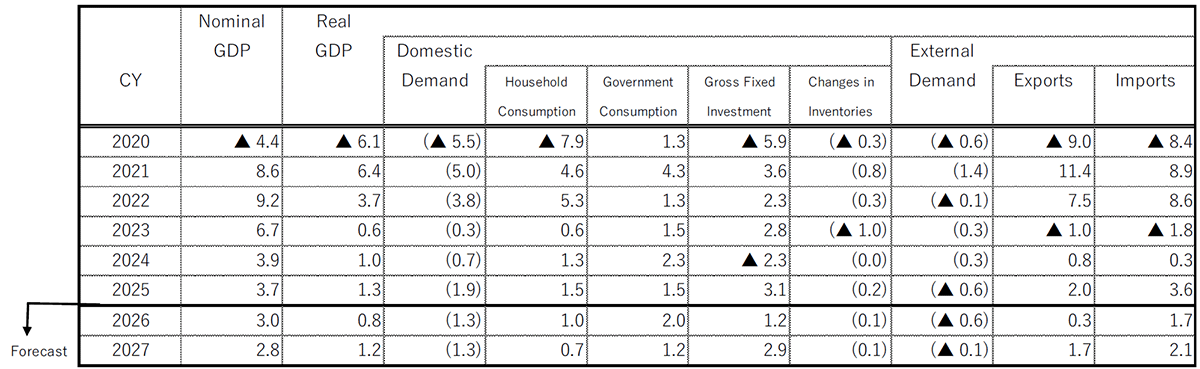
Note: Figures in brackets are contributions to real GDP growth.
Source: Daiichi Life Research Institute.
4. China and Emerging Asian Economies
Current State of the Economy: Adverse Impact of the Iran Crisis Offset by the Positive Effects of Global AI and Semiconductor Investment
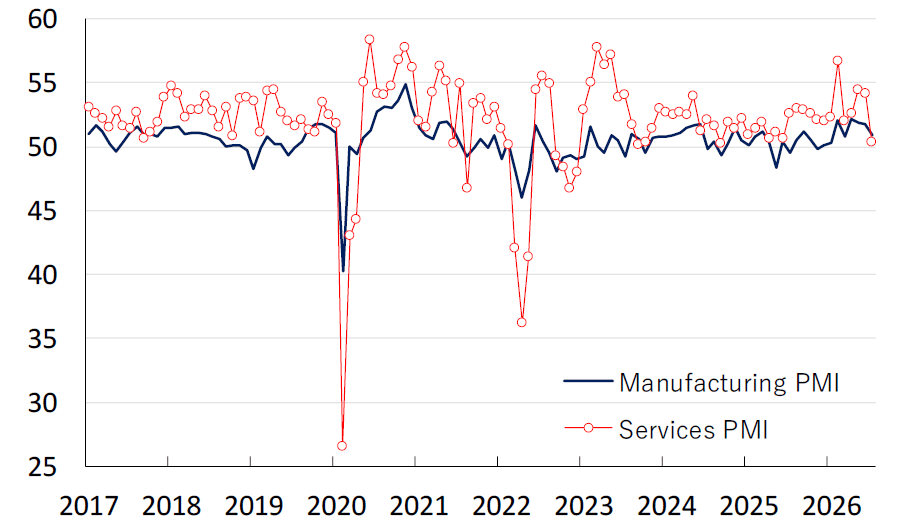
At the National People’s Congress in March, the Chinese authorities lowered their economic growth target for 2026 to 4.5–5.0%. This reflected growing uncertainty over the economic outlook, as U.S. tariff policy was expected to weigh on external demand through its adverse impact on the global economy, while domestic demand remained sluggish. Nevertheless, the Chinese economy got off to a solid start, with real GDP growth in the January–March quarter reaching 5.0% year on year, the upper end of the government’s target range. Although domestic demand, including private consumption, continued to lack momentum, robust exports to emerging market economies and Europe helped drive economic growth. External demand has remained firm since then, with exports to the United States, which had previously declined, also showing signs of recovery.
Meanwhile, real GDP growth slowed to 4.3% year on year in the April–June quarter, as weak domestic demand continued to weigh on the economy. Rising commodity prices, particularly crude oil, amid the deterioration in the Iran Crisis have intensified inflationary pressures in China, especially in the corporate sector. As a result, the GDP deflator turned positive in the April–June quarter for the first time in three years, indicating that the Chinese economy is now in an inflationary environment at the macroeconomic level. At the same time, households remain highly price-sensitive, while companies have been unable to fully pass higher raw material costs on to product prices, leaving disinflationary pressures in place. China’s economy can therefore be seen as exhibiting an increasingly pronounced “K-shaped” pattern.
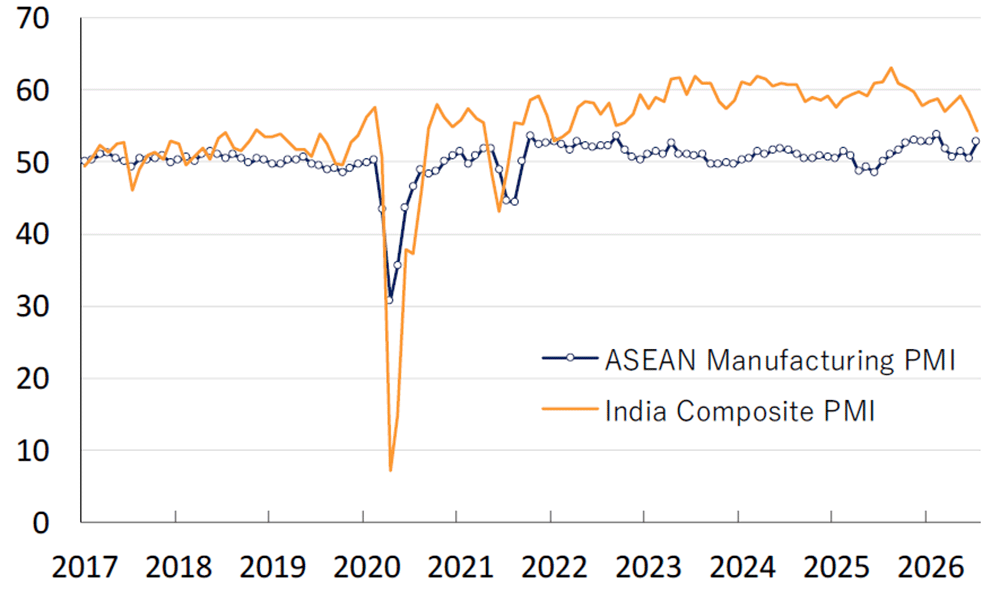
Many emerging Asian economies were initially feared to be particularly vulnerable to the adverse effects of U.S. tariff policy because of their structurally high dependence on external demand. However, following a ruling by the U.S. Supreme Court that effectively lowered tariff rates, the impact proved relatively limited. By contrast, the rise in commodity prices, including crude oil, stemming from the deterioration in the situation in Iran dealt a direct blow to emerging Asian economies, many of which rely heavily on energy imports from Gulf oil-producing countries. Supply concerns and higher prices were compounded by imported inflation resulting from the depreciation of local currencies against the U.S. dollar amid dollar strength in financial markets, leading to accelerating inflation across the region. In addition, some central banks shifted toward monetary tightening to stabilize prices and exchange rates, raising concerns that domestic demand, particularly household consumption, could be constrained.
However, strong global investment in artificial intelligence (AI) and semiconductors has boosted exports, while data center-related investment has also become increasingly active across the region. Thus, in emerging Asian economies, the adverse effects of the worsening Iran crisis are currently being offset by robust global AI- and semiconductor-related investment.
Even so, uncertainty has increased as the situation in Iran has dragged on. Crude oil and natural gas prices remain elevated, while coal prices have also remained high amid increased substitution demand, resulting in persistent energy inflation. In addition, the emergence of a “super El Niño” has brought unusually high temperatures and low rainfall to emerging Asian economies, adversely affecting agricultural production and contributing to food inflation. Concerns are therefore mounting rapidly that inflation concentrated on essential goods such as food and energy will weigh on domestic demand, particularly private consumption.
RatingDog China Mfg. and Services PMI
Source: S&P Global.
S&P India Comp. PMI and ASEAN Mfg. PMI
Source: S&P Global.
Economic Outlook: Close Attention Required to the Iran Crisis, El Niño-Related Weather Risks, and the Fed’s Policy Outlook
In China, at the Politburo meeting of the Communist Party held in late July, the leadership reaffirmed its commitment to steadily advancing major national projects and indicated that it would accelerate the implementation of public investment. Accordingly, the Chinese economy is expected to be supported by an expansion in government consumption as well as an increase in fixed asset investment reflecting progress in public investment projects.
The authorities have also announced a Five-Year Plan for Boosting Consumption, setting a target of increasing the value of retail sales by around 20% from the 2025 level to approximately RMB 60 trillion by 2030. This is the first time China has announced a plan focused specifically on personal consumption, and the significance of setting an annual growth target of 3.7 percent is considerable. However, many of the specific measures remain unclear, and given that weakness in the property market and the employment environment continues to weigh on household consumption, the outlook for domestic demand is likely to remain highly uncertain.
Moreover, in spite of excess supply persisting in China, the Xi Jinping leadership continues to pursue reforms centered primarily on the supply side. As a result, China’s economy is expected to become increasingly dependent on external demand going forward. The deterioration in the situation in Iran has boosted global demand for renewable energy and electric vehicles (EVs), areas in which Chinese companies are highly competitive internationally. This is expected to provide support for China’s external demand. However, we must also be mindful of the possibility that concerns about China’s “export of deflation” could grow globally.
In emerging Asian economies, the downward pressure from energy inflation caused by the deterioration in the Iran Crisis has so far been offset by the positive effects of strong global demand for AI and semiconductors. Looking ahead, robust global AI and semiconductor demand is expected to continue driving external demand, and related investment, particularly in data centers, should support capital expenditure.
On the other hand, energy inflation, which remains a key source of uncertainty for domestic demand, could persist for an extended period as uncertainty surrounding the Iran Crisis continues and commodity prices, including crude oil, remain elevated. Furthermore, the emergence of El Niño is expected to bring unusually high temperatures and low rainfall to emerging Asian economies. Weak agricultural production could lead to food inflation, while the risk of a prolonged period of food inflation is also increasing. Consequently, inflation concentrated on essential goods such as food and energy could continue to constrain domestic demand, particularly household consumption.
In addition, emerging Asian economies need to pay close attention to the future course of monetary policy by the Federal Reserve (Fed). At present, the appreciation of the U.S. dollar has paused somewhat following coordinated currency intervention by the United States and Japan. However, there are concerns that the Iran Crisis and the El Niño phenomenon could become global sources of inflation. If the Fed were to shift toward further monetary tightening, renewed U.S. dollar strength could place downward pressure on emerging Asian currencies. In such a scenario, central banks across the region could be compelled to tighten monetary policy in order to stabilize prices and currencies, which in turn could exert additional downward pressure on domestic demand.
Economic Growth Rates in China, India, NIES, and ASEAN5 Countries
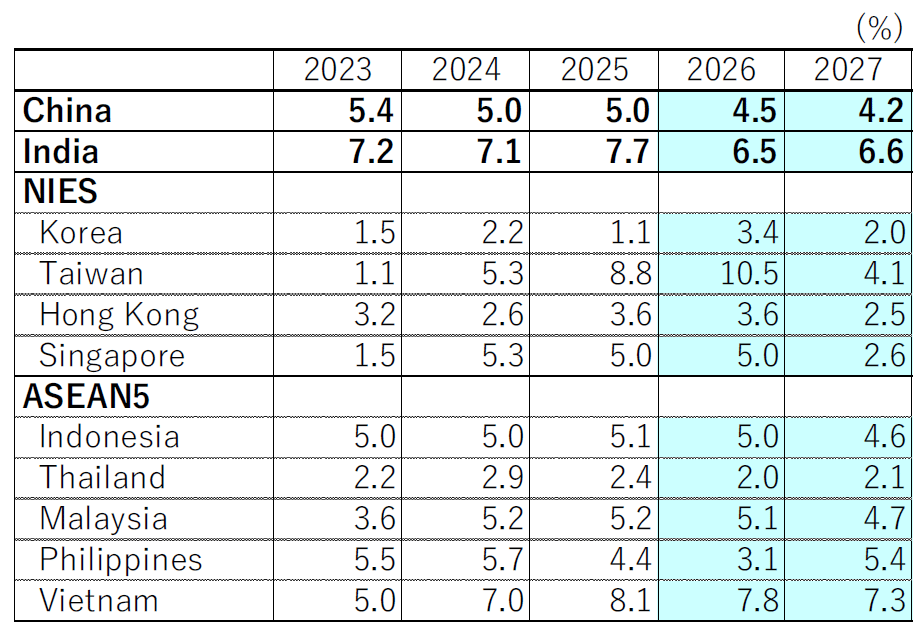
Source: CEIC data. The light blue areas indicate our forecasts. For India, data are based on the fiscal year (From April to March).
Disclaimer:
This report has been prepared for general information purposes only and is not intended to solicit investment. It is based on information that, at the time of preparation, was deemed credible by Daiichi Life Research Institute, but it accepts no responsibility for its accuracy or completeness. Forecasts are subject to change without notice. In addition, the information provided may not always be consistent with the investment policies, etc. of Daiichi Life or its affiliates.