



- Report Index
- Current Initiatives of the Takaichi Administration
- Economic Trends
-
2026.04
Current Initiatives of the Takaichi Administration
Based on materials distributed by the Cabinet Office at the 3rd Economic and Fiscal Policy Council meeting in 2026.
Toshihiro Nagahama
- Executive Summary
-
- The Takaichi administration identifies the causes of Japan's economic stagnation as "excessive austerity," "insufficient domestic investment," and "overly restrictive labor regulations". To raise the potential growth rate, the administration is shifting toward a state-led approach to attract private domestic investment.
- Specifically, the government will promote public-private partnerships in Crisis Management Investment (economic security, food/energy, national resilience) and Growth Investment (AI, quantum computing, startups) to boost employment, income, and productivity.
- Regarding fiscal policy, the administration aims to move away from single-year budgeting, utilizing multi-year budgets and funds to improve predictability. Simultaneously, it seeks fiscal sustainability through administrative reform and stabilizing the debt-to-GDP ratio. Household support will be enhanced through temporary consumption tax cuts on food and beverages and a transition to "refundable tax credits" for low-to-middle-income earners.
- While Abenomics focused on "demand stimulation to escape deflation," Sanaenomics prioritizes "strengthening supply capacity (potential growth rate)" through "responsible active fiscal policy".
1.Current Assessment of the Japanese Economy
This report provides a supplementary explanation of the "Sanaenomics" economic policy based on documents from the Cabinet Office's Council on Economic and Fiscal Policy held on March 26.
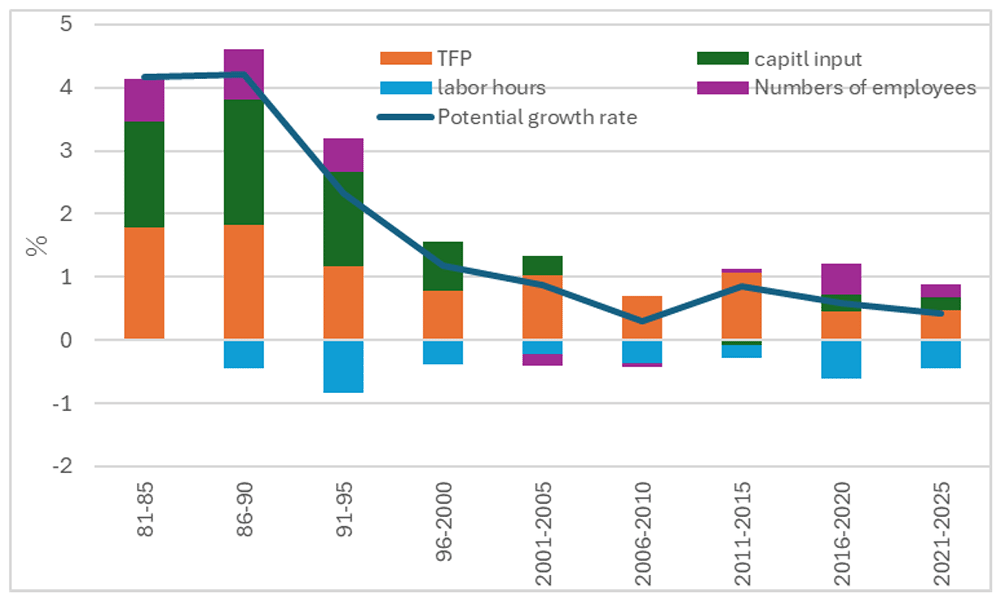
Japan possesses a strong foundation of technological innovation and labor efficiency. However, potential growth has remained low due to a lack of domestic investment and a decrease in working hours (see Figure 1). The Takaichi administration has declared a departure from excessive austerity and intends for the state to lead the way in stimulating private investment.
Figure 1: Breakdown of Potential Growth Rate Factors
The primary cause of the slump is insufficient domestic investment.
Source: Cabinet Office
2.Crisis Management and Growth Investment
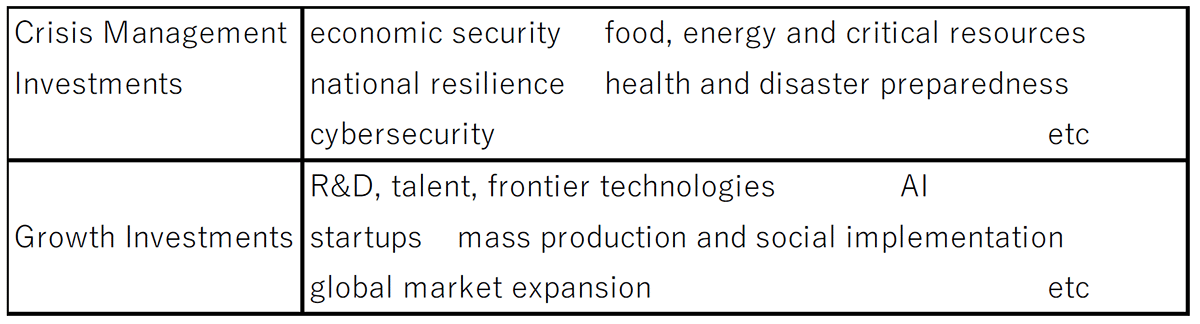
Investment strategies are built on two pillars: Crisis Management Investment and Growth Investment.
Crisis Management Investment: Minimizing risks to citizens' lives through economic security, food/energy self-sufficiency, and national resilience.
Growth Investment: Providing comprehensive support for AI, startups, quantum technology, and their global expansion.
By utilizing strategic tax incentives for capital expenditure, the administration aims to create jobs and raise both income and productivity.
Figure 2: Crisis Management Investments and Growth Investments
Source: Cabinet Office
3.Reforming Budgetary Processes
To accelerate investment, "fiscal rules" must be revised. The administration is moving away from single-year budgeting and heavy reliance on supplementary budgets, which hindered long-term projects. Instead, it will use multi-year budgets and long-term funds to increase predictability.
Fiscal sustainability will be maintained by reviewing wasteful subsidies and implementing administrative reforms. A clear target will be set to stabilize and lower the government debt-to-GDP ratio (see Figure 3).
Figure 3: Decomposition of the Government Debt-to-GDP Ratio
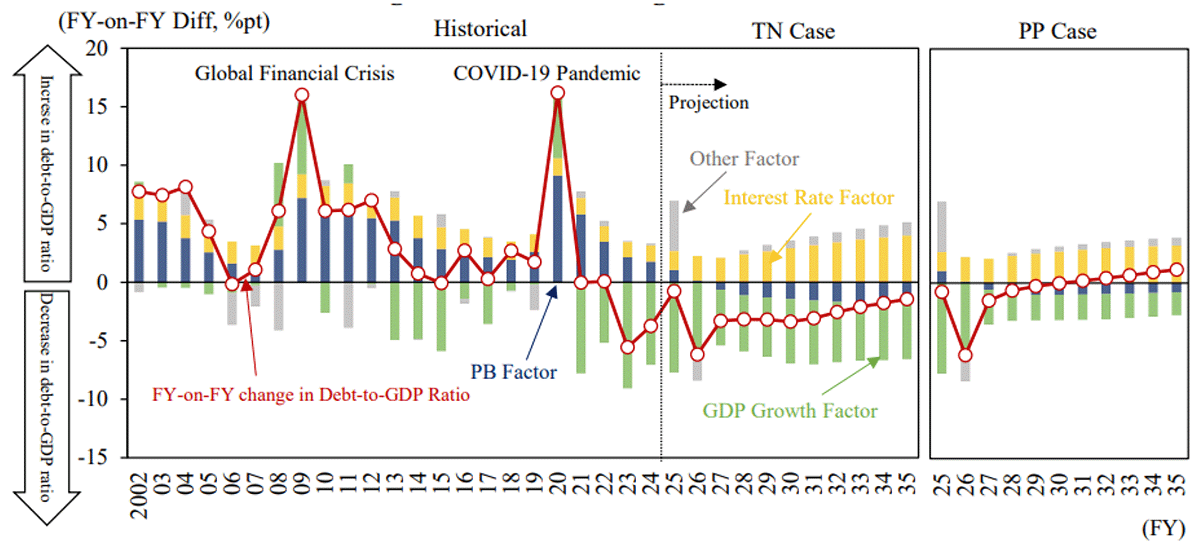
Note: The fiscal year-on-fiscal year (FY-on-FY) difference in the outstanding debt-to-nominal GDP ratio can be decomposed into: (i) the current effective interest rate multiplied by the previous year's debt-to-GDP ratio; (ii) the nominal GDP growth rate multiplied by the previous year's debt-to-GDP ratio (a deduction factor); and (iii) the current primary balance (PB) to nominal GDP ratio (a deduction factor). The nominal GDP in the denominators of (i)-(iii) refers to nominal GDP in the current year.
Source: Cabinet Office
4.Household Support
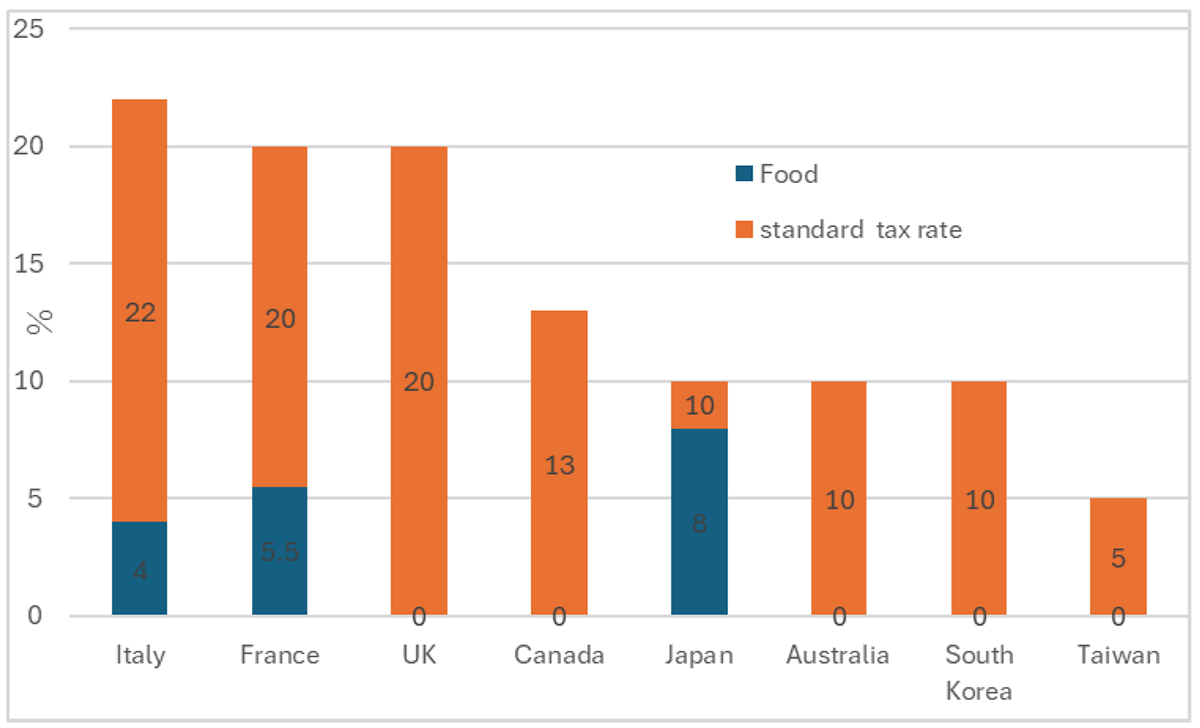
Temporary reduction of consumption tax on food and beverages, which is high compared to other nations (see Figure 4).
Phased transition to "refundable tax credits" to provide more precise support for low-income earners who are currently underserved.
Figure 4: international comparison of value-added tax (VAT) rates
Source: Ministry of Finance
5.Differences from Abenomics
Abenomics utilized the "Three Arrows" (monetary easing, flexible fiscal policy, and growth strategy) to stimulate demand and escape deflation.
In contrast, Sanaenomics represents "Responsible Active Fiscal Policy". Its primary focus is on strengthening supply capacity (potential growth) through public-private strategic investment. The goal is to establish a "virtuous cycle" where investment drives growth, and growth leads to further investment.
Disclaimer:
This report has been prepared for general information purposes only and is not intended to solicit investment. It is based on information that, at the time of preparation, was deemed credible by Daiichi Life Research Institute, but it accepts no responsibility for its accuracy or completeness. Forecasts are subject to change without notice. In addition, the information provided may not always be consistent with the investment policies, etc. of Daiichi Life or its affiliates.