




- Report Index
- Chopin Competition and the Resonance of SHIAWASE
- Illuminating Tomorrow
-
2025.10
Chopin Competition and the Resonance of SHIAWASE
“Was Chopin Happy?”—Genius, Exile, and Fulfillment
Rui Shuhama
Author’s Note
Rui Shuhama is formally educated and trained in piano performance and music therapy at universities in the United States. This article is part of her ongoing SHIAWASEspan research at the University of Tokyo, developed in collaboration with Dai-ichi Life Group (2025). The project explores SHIAWASE—subjective happiness, fulfillment, and belonging—and its potential for meaningful measurement.
1. Prologue—Chopin Competition: Resonance Across Time and Place
After three weeks of intense performances by young pianists under unthinkable pressure and the gaze of the world through the Narodowy Instytut Fryderyka Chopina (NIFC or the Chopin Institute)’s YouTube broadcast, the 19th International Fryderyk Chopin Piano Competition came to an end on the night of October 20 in Warsaw, Poland.
There were hours of waiting for the verdict—at 2:30 a.m. on Tuesday, October 21—the results were announced on the famous stairs of the Hall of Mirrors at the National Philharmonic in Warsaw (Material 1-2), following the long-standing tradition of the competition. The emotionally charged moment, streamed worldwide, was witnessed by hundreds of thousands of viewers across time zones.
Material 1: The Famous “Stairs”
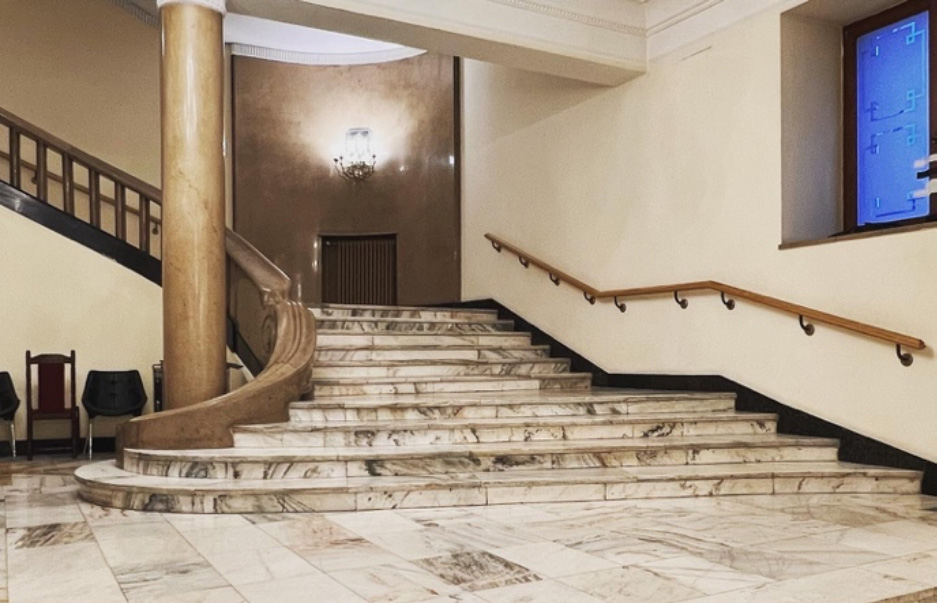
Source: R.SHUHAMA, Filharmonia Narodowa, Warsaw, 2021.
Material 2: The Crowd at the Stairs
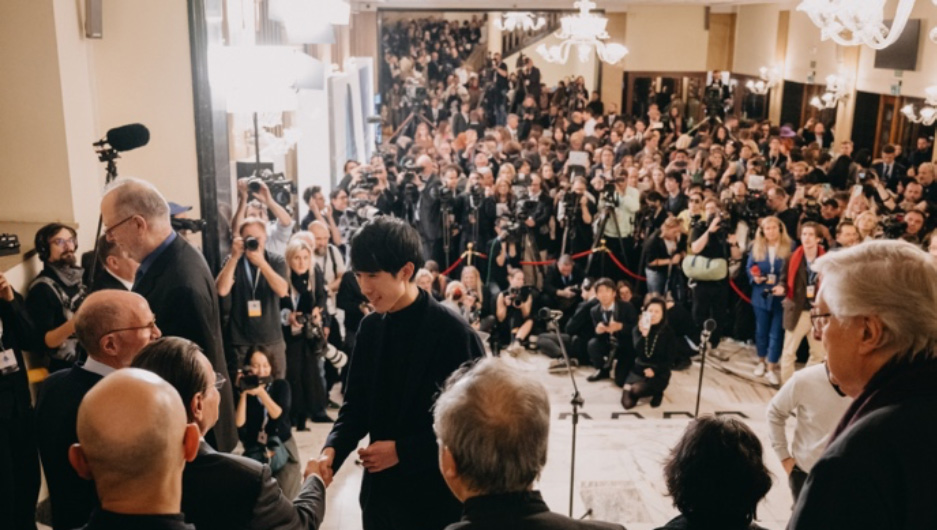
Source: Wojciech Grzędziński / NIFC
The crowd overflowed into the marble corridors, holding their breath as history repeated itself once again—the world waiting to hear who would become Chopin’s voice for the next five years. The name was called. Eric Lu, a-27-year-old pianist from the United States (Material 3) won the first prize and the gold medal.
fMaterial 3: Eric Lu, The Winner 2025

Source: Wojciech Grzędziński /
NIFC
That night in Warsaw:
—was Chopin happy?
2. What is Chopin Competition?
(1) Authenticity
Every five years, Warsaw becomes the piano capital of the world, hosting one of the most prestigious and emotionally charged events in classical music—the International Fryderyk Chopin Piano Competition.
Among the world’s major competitions; the International Tchaikovsky Competition (Russia), the Queen Elisabeth Competition (Belgium), the Leeds International Piano Competition (United Kingdom), the Van Cliburn International Piano Competition (United States), the Hamamatsu International Piano Competition (Japan), the Chopin Competition in Poland stands apart. It is one of the world’s three most renowned competitions, alongside the Tchaikovsky and Queen Elisabeth, and is also among the oldest and most demanding in the history of classical piano performance (NIFC, 2025; Polish History Museum, 2025). Unlike most competitions, it celebrates a single composer—Fryderyk Chopin—making every stage, every performance, and every prize a tribute to one musical soul.
(2) History
Conceived in 1925 by Jerzy Żurawlew, a Polish pianist who sought to restore public appreciation for Chopin’s music among young people captivated more by sports than by art, the competition was inspired by the spirit of athletic contests: he envisioned a “musical competition” that would reward both discipline and artistry (NIFC, 2021). The first edition was held in Warsaw in 1927. Since then, the Competition has been interrupted only twice—during World War II and the COVID-19 pandemic—before its postwar revival in 1949 marking the centenary of Chopin’s death.
(3) Discipline
The Chopin Competition follows a rigorous, five-stage structure: a preliminary round (April–May) precedes the main competition in October, which unfolds through the first, second, and third rounds, culminating in the final round (NIFC, 2025).
Applications are first screened based on required documents, including proof of major artistic activities within the past three years, two letters of recommendation, and a video recording. Only those who pass the initial evaluation are invited to perform in the preliminary stage. According to the NIFC regulations, winners of select major international competitions such as the Queen Elisabeth, Van Cliburn, Leeds International and Hamamatsu International competitions qualify for direct entry to the main Chopin Competition. Contestants perform exclusively Chopin repertoire from the initial video submission to the final round. No other composer is permitted—reflecting the Competition’s unique combination of interpretive insight, technical mastery, and disciplined artistry.
For the 19th Competition (2025), new regulations brought a significant change: the addition of Polonaise-Fantasy in A-flat major, Op. 61 as an added solo work in the final round, performed alongside one of Chopin’s two piano concertos. While the tradition of ending with a concerto accompanied by orchestra remained, the new rule expanded the program’s scope, challenging even the most experienced participants with its emotional and physical demands.
The contestant’s age limit of 16 to 30 (born between 1995 and 2009 for the 19th Competition; NIFC, 2025) ensures that each generation of pianists has only one or two chances to compete in lifetime. Held just once every five years, it is often described as the Olympics of the piano, a meeting place of youth, discipline, friendship, and destiny.
3. Chopin and Poland—The Roots of Reverence, Resistance, and Resilience
Born on March 1, 1810, in the village of Żelazowa Wola (Material 4), about 54 km west of Warsaw, Fryderyk Franciszek Chopin (Material 5) entered the world of music and grew up in Warsaw under the political shadow of partitioned Poland (NIFC, 2025).
Material 4: Birthplace of Chopin in Żelazowa Wola
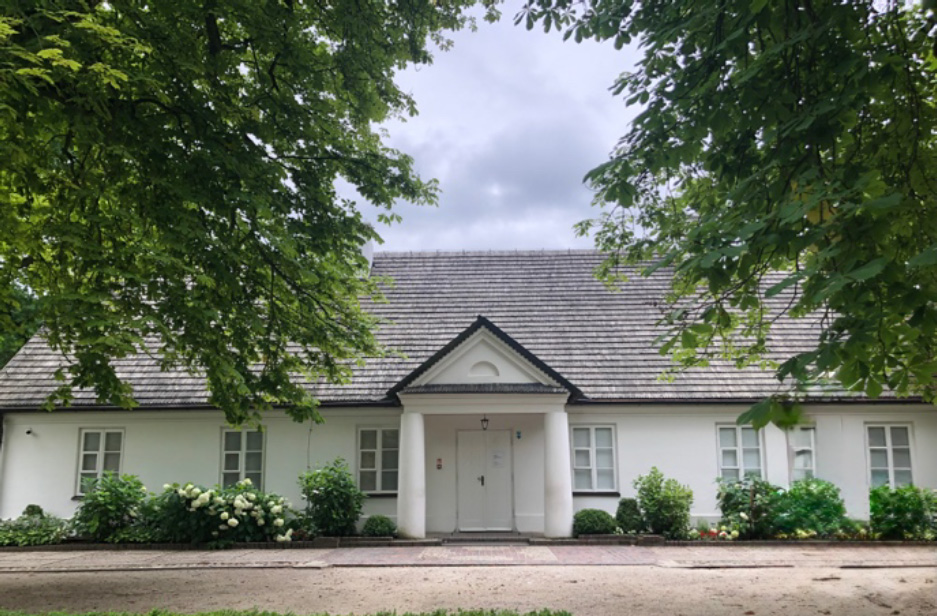
Source: R.SHUHAMA, Żelazowa Wola, 2021
Material 5: Portrait of Chopin
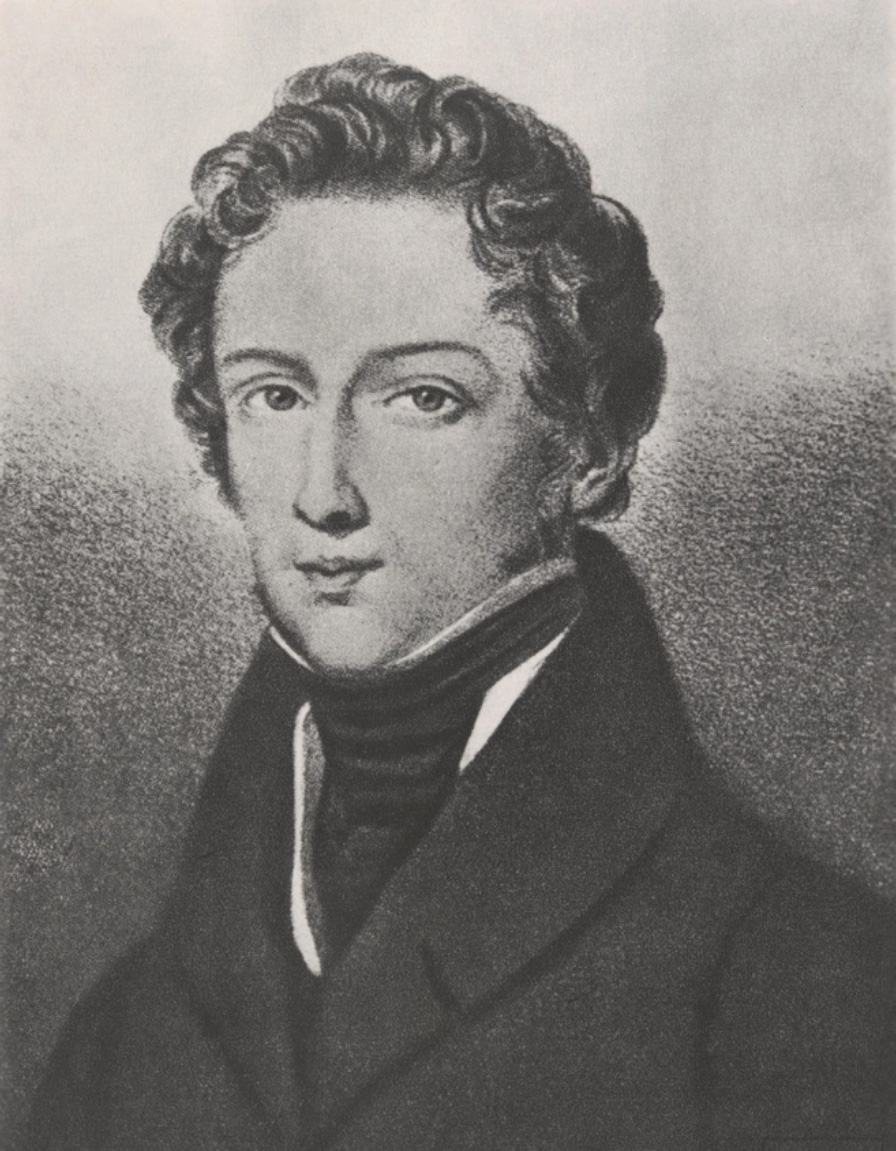
Source: The Polish Music Library
(1) Warsaw—Genesis of Longing
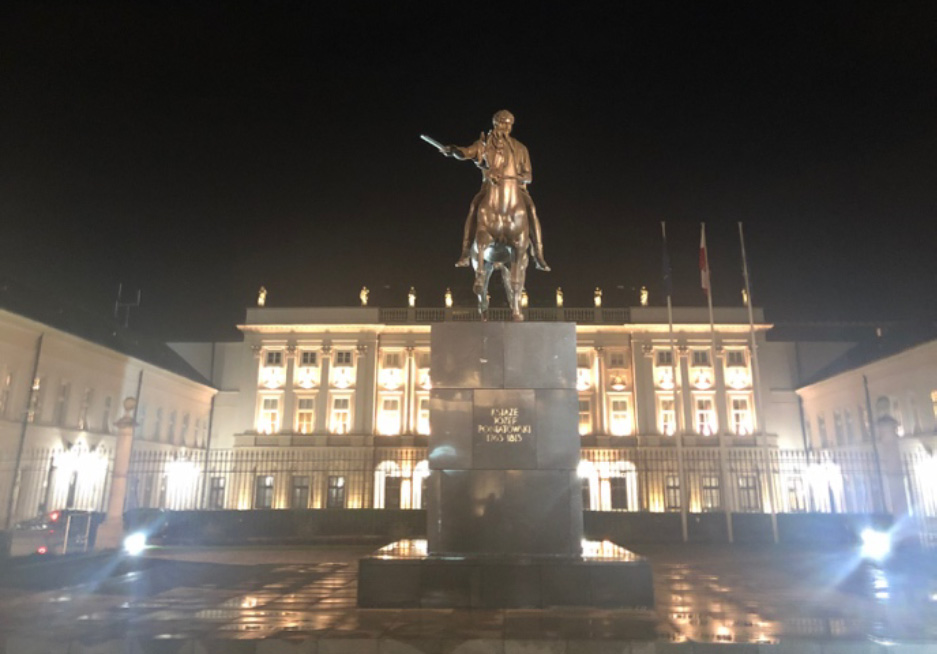
His father, Nicolas Chopin, was a French émigré from Lorraine who settled in Poland in 1787 at sixteen and worked as a teacher. His mother, Justyna Krzyżanowska, was Polish and came from a family with musical inclinations; she often played the piano and sang at home. Nicolas also played the flute and violin. His elder sister Ludwika showed musical talent at early and taught her younger brother Fryderyk to play the piano (Zamoyski, 2011). At six, he began formal private lessons, at seven composed his first work, the Polonaise in G minor, being invited in salons to play for nobilities in Warsaw, and at eight he made his first public appearance on February 24, 1818 at a charity concert at Radziwiłł Palace (now, the Presidential Palace; Material 6).
Material 6: Radziwiłł Palace—Now the Presidential Palace in Warsaw
Source: R.SHUHAMA, Warsaw, 2021.
He had two younger sisters: Izabela, who enjoyed good health and lived to seventy, and Emilia, the youngest, a frail child suffered recurrent respiratory illness (NIFC, 2025).
Chopin himself was a “sickly and delicate” child (Liszt, 2005). Despite his frail constitution, Chopin experienced moments of health and youthful joy. During the summer of 1825 he spent carefree days with friends, walking, riding, and playing outdoors. Their excursions took them to nearby estates and as far as Toruń, where he admired Gothic churches, tasted the city’s famous gingerbread, and visited the birthplace of Copernicus (Zamoyski, 2011).
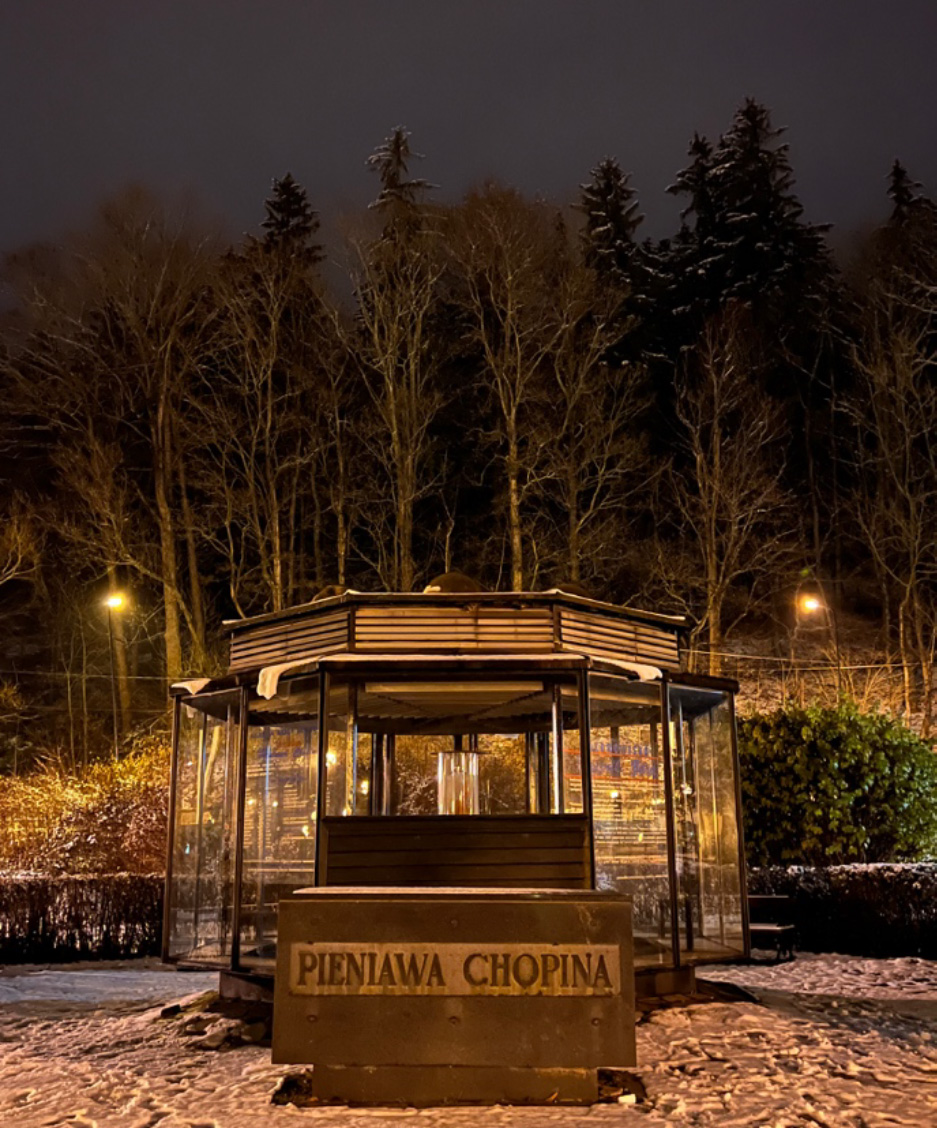
The following year, at sixteen, his health declined. On his doctor’s and his teacher Józef Elsner’s recommendation, in August 1826, Chopin travelled with his mother and sisters, Ludwika and Emilia—who was critically ill with tuberculosis—to the mountain spa of Duszniki-Zdrój, located in Silesia, then part of Germany (NIFC, 2025). Its curative mineral springs—Zimny Zdrój (Cold Spring)—were first mentioned in the 15th century as “springs enjoying popularity as curative.” Letni Zdrój (Warm Spring), now called Pieniawa Chopina (Chopin’s Spring) (Material 7), was discovered in 1797, when curative baths were introduced with six heated tubs. (Observation based on the author’s field visit, Duszniki-Zdrój Spa, 2022.)
Material 7: Pieniawa Chopina (Chopin’s Spring)
Source: R.SHUHAMA, Duszniki-Zdrój, 2022.
Visitors—including Chopin—followed a strict medical routine prescribed by physicians: drinking measured doses of mineral water from the local springs Jan Kazimierz and the later-named Pieniawa Chopina, strolling through the spa park, and resting between meals. The bicarbonate–calcium–sodium–magnesium waters were famed for their tingling taste and prescribed for chronic respiratory conditions, anaemia, and post-illness recovery—precisely the ailments afflicting the Chopin family. Though the scientific understanding of “balneotherapy” was primitive by modern standards, its ritual discipline offered both physical relief and emotional rhythm—a pause of care amid fragility.
The spa’s regimen, together with the mountain air, gradually improved Fryderyk’s health. On August 18, 1826, he wrote: “I have been drinking whey and the local waters for two weeks, and they say that I am looking a little better (…), but I am said to be getting fat and therefore lazy, to which you can ascribe the long lethargy of my pen. But believe me, when you learn about my mode of life, you will agree that it is difficult to find a moment for sitting at home” (Chopin, 1826).
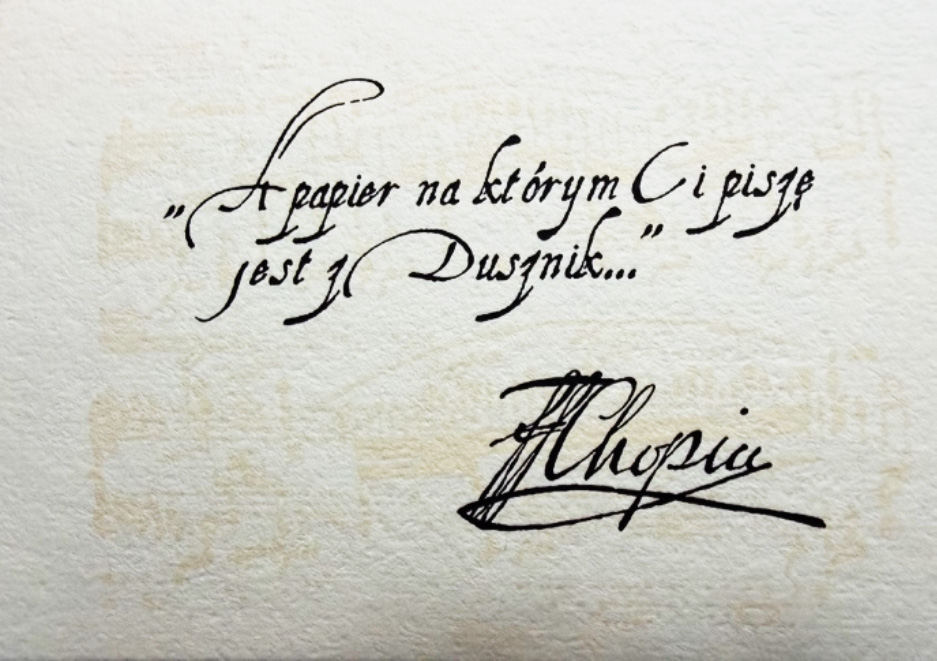
During his stay, Chopin followed the quiet rhythm of spa life—morning walks through the park, prescribed sips of mineral water, and long hours of rest. In his letters, he hinted at a rare peace that his fragile health seldom allowed. He also took short sightseeing walks around the area, visiting a nearby hermitage and climbing dozens of stone steps to take in the panoramic view of the surrounding hills. On another excursion, he likely toured the seventeenth-century paper mill—today the Museum of Papermaking—and later wrote to his friend Jan Białobłocki, noting that “(…) the paper on which I write to you is from Reinerz (the German name for Duszniki)” (Material 8).
Material 8: Replica of Chopin’s Letter to Jan Białobłocki
Source: R.SHUHAMA, photographed at author’s home, 2025.
Although he enjoyed the beauty of nature and gradual recovery, Chopin wrote to his teacher Elsner lamenting the monotony of the stay: “There is something I lack here; something which all the beauties of Reinerz cannot make up for (…). Imagine—there is not a single decent piano in the whole place” (Chopin, 1826).
Despite the inconvenience, he found a piano and gave charity concerts at the Pump Room (then the Kurhaus) to raise funds for orphans of a deceased patient—a gesture remembered as his first public performance outside Warsaw (NIFC, 2025). The townspeople received him warmly. The place that once brought him recovery now honors him: one of its main springs, renamed Pieniawa Chopina after World War II, stands beside a concert hall that hosts the International Chopin Piano Festival in Duszniki-Zdrój—the oldest uninterrupted Chopin festival in the world, celebrating its 80th anniversary in 2025.
Two years later, at eighteen Chopin suffered his first great loss when his youngest sister, Emilia, died at fourteen of a massive gastrointestinal hemorrhage. Though devastated, he kept his grief private (Zamoyski, 2011). The shock of her death—after their hopeful cure at Duszniki—left a permanent mark on his sensibility. In its aftermath, the family left their residence at Warsaw University, unable to bear the memories, and moved to the annex of the Czapski (Krasiński) Palace on Krakowskie Przedmieście, where Chopin would live until his departure from Warsaw in 1830. In later years, he would translate such unspoken pain into the quiet melancholy and tenderness that breathe through his nocturnes and preludes—music that feels less composed than remembered.
Improving his health was a constant family concern, and his fragility remained a lifelong companion—one that limited his concert appearances and shadowed his mental well-being, yet deepened his imagination and gave rise to some of the most luminous piano compositions ever written.
(2) Vienna—First Journey
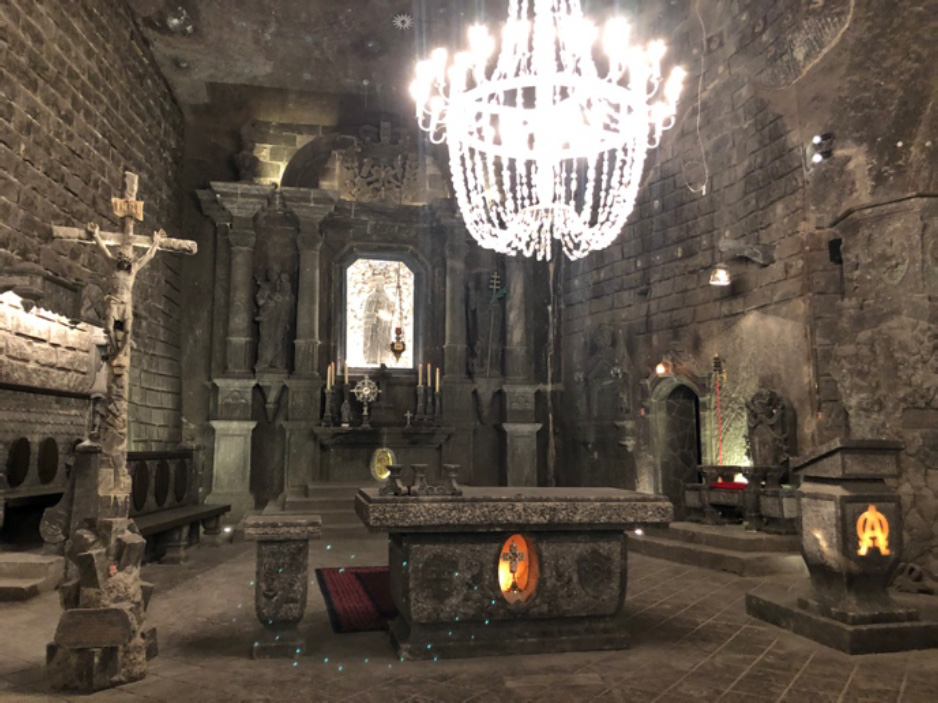
In July 1829, at nineteen, Chopin completed his studies at the Warsaw Conservatory (then part of Warsaw University). Immediately after his final examinations, he left for Vienna with university friends. On the way, they stopped in Kraków and visited the Wieliczka Salt Mine (Material 9), a vast underground complex reaching 327 meters deep and extending over 287 kilometers of tunnels and chambers. First recorded in 1044 under Casimir I, it was among the original UNESCO World Heritage Sites (1978). Chopin descended into the mine on July 24, 1829, as noted in the visitor’s book (NIFC, 2021).
During the trip, the group lost their way and wandered for hours in heavy rain—yet Chopin did not catch cold, proof that his health had improved (Zamoyski, 2011). After ten days of travel, they reached Vienna, where his first public triumph abroad awaited. He performed two concerts to overwhelming acclaim from audiences and critics alike—beyond anything he had imagined. Already celebrated in Warsaw, he was now recognized in a city accustomed to Europe’s greatest musicians. The success opened a path beyond Poland, marking the true beginning of his international career.
Material 9: St. Kinga’s Chapel in the Wieliczka Salt Mine
Source: R.SHUHAMA, Wieliczka Salt Mine, 2021.
Note: A subterranean church curved entirely from salt—including chandeliers and altar—symbolizing the enduring faith and artistry of Polish miners and leaving a profound emotional impression on visitors for centuries.
On the return to Warsaw, Chopin and his friends traveled by carriage through Bohemia (now the Czech Republic) and Silesia (now largely southern Poland, including Wrocław, Opole, and Katowice), stopping in Prague, Teplice, Dresden, and Wrocław.
He enjoyed sightseeing, meeting local musicians, and even visiting Prince Clary in Teplice. After a twenty-day journey, he returned home on September 10, 1829, high in spirits—a homecoming hero (Zamoyski, 2011). In a letter to Tytus dated September 12, he wrote that Vienna had “dazzled, enchanted and beguiled me for two weeks” (Chopin, 1829).
(3) Concerto F minor—First Love
After his triumph in Vienna, life in Warsaw began to feel slightly dull to Chopin. Having graduated at the top of his class from the university, he saw his closest friend from the Lyceum years, Tytus Woyciechowski, leave Warsaw for his family estate in Poturzyn, after his mother’s death in the summer of 1829. With his companion gone and the city’s concerts and operas offering little inspiration, Chopin grew restless (Zamoyski, 2011).
He had already begun sketching his Piano Concerto in F minor, though progress was slow. While not politically active, Chopin often spent time at coffee shops such as Café Brzezińska (now “Telimena Green Café Nero”), the oldest coffee house in Warsaw and a gathering place for revolution-minded intellectuals. He did not join their conspiratorial debates but would play for his friends, sensing the mounting tension of a nation on the brink of uprising (Material 10).
Material 10: Café Brzezińska—Now Telimena Green Café Nero
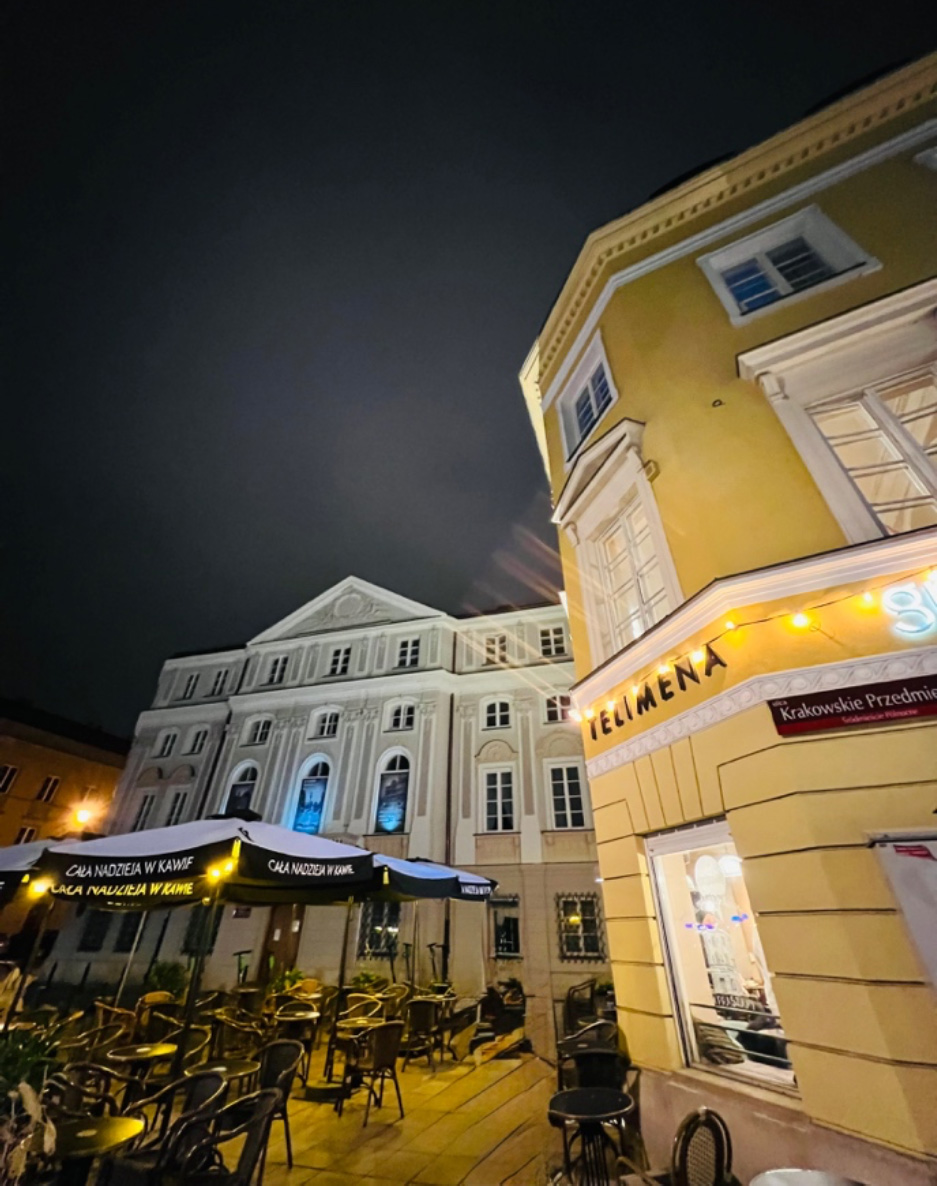
Source: R.SHUHAMA, Warsaw, 2021.
Note: Established in 1815, Café Brzezińska (now Telimena) is Warsaw’s oldest coffee house and one of Chopin’s favorite gathering places. He stopped here for coffee the day before departing Warsaw.
Around this time, at a concert, Chopin met a young soprano student at the Warsaw Conservatory, Konstancja Gładkowska
(Material 11) and fell in love. He described her as “my ideal,” yet kept his feelings secret, confiding only in his
closest friends or expressing them at the piano. As he wrote to Tytus on October 3, 1829:
“Wiesz, do czego ta aluzja. Fortepianowi gadam to, co bym tobie był nieraz powiedział.” (Chopin 1829)
“You know what I mean. I tell my piano the things I would have told you many times” (Translation by the
author).
Material 11: Konstancja Gładkowska (1810–1889)
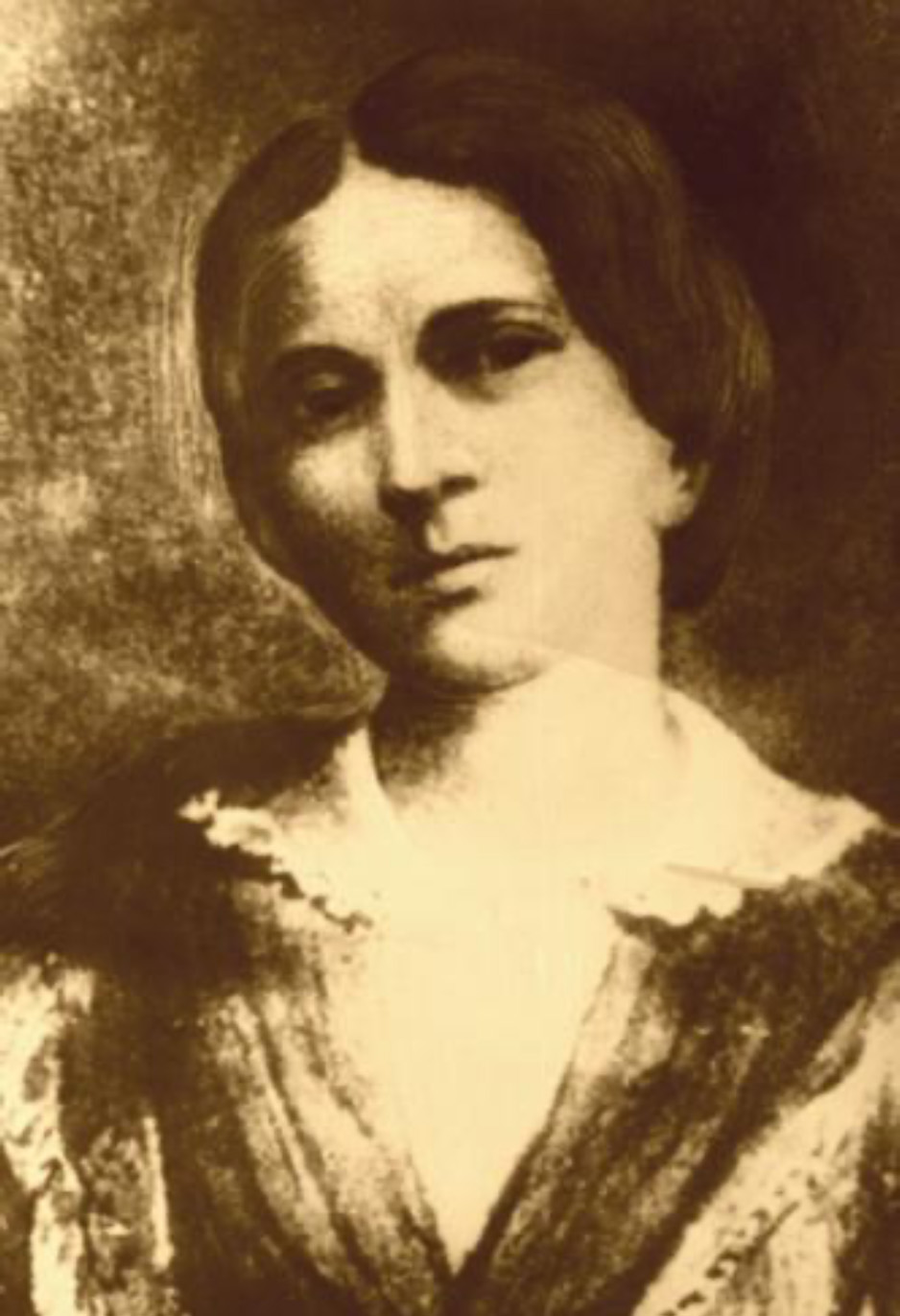
Source: NIFC
When Chopin Piano Concerto in F minor, Op. 21 was finally published in 1836 in Paris, it was formally dedicated to Delfina Potocka. Yet from his 1829 letter to Tytus Woyciechowski, we know that Chopin had secretly dedicated its second movement (Larghetto) to Konstancja Gładkowska (Chopin, 1829):
“As I already have, perhaps unfortunately, my ideal, whom I faithfully serve, without having spoken to her for half a year already, of whom I dream, in remembrance of whom was created the adagio of my concerto” (Translation by the author).
Although Chopin left no formal performance instructions beyond the markings in his manuscripts, this second movement remains the only piece for which he expressed its inner meaning in words (Zamoyski, 2011)—in a letter to Tytus dated May 15, 1830 Chopin wrote:
“(…) It is not meant to be powerful; it is more romantic, calm, and melancholic. It should give the impression of a pleasant glance toward a place filled with a thousand delightful memories. It is like dreaming in a beautiful springtime—yet under the moonlight. That is why I accompany it with muted strings, giving the violins a silvery, nasal tone.” (Chopin, 1830; Translation by the author)
In a typical musical structure—such as a concerto or sonata—the second, slower, lyrical movement is marked Adagio. In Chopin’s Piano Concerto in F minor, however, the manuscript reads Larghetto—“somewhat broadly.” It conveys the same reflective intimacy as Adagio, yet with a gentler, more fluid pulse—imbued with the tenderness of his secret devotion to Konstancja.
Although deeply moved by his feelings, Chopin never confessed them directly to her. His shyness, sensitivity, and fear of embarrassment restrained him from declaration (Zamoyski, 2011). Instead, he confided his emotions to his friends and poured them into music. This pattern—of turning emotion inward and transmuting it into sound rather than speech—would shape both his relationships and his art.
Reading Chopin’s letters from this period reveals not pathology, but the turbulence of ordinary adolescence. Though often portrayed as shy, self-pity, and fragile, young Chopin was sociable, witty, and surrounded by friends. His hesitation and longing reflect not fragility, but the universal confusion of adolescence itself. The prodigy of Warsaw was also simply a young man learning how to feel. Even in 2025, such a young man’s hesitance and silence would surely have confused Konstancja just the same (Based on the author’s reading of Chopin’s Letters).
(4) Paradise—The Radziwiłł Family
While Chopin was making his celebrated debut in Vienna, the rest of his family visited Prince Antoni Radziwiłł at his elegant hunting palace of Antonin (Material 12-14), completed in 1824. The prince and his family led an active social and artistic life there, frequently hosting prominent figures from the worlds of politics and art. Prince Antoni Radziwiłł was an ardent patron of the arts, a supporter and protector of many gifted artists. He transformed Antonin into a vibrant music salon, welcoming such luminaries as Paganini, Goethe, Beethoven, and Chopin, and he also provided financial assistance to several musicians, including Chopin.
According to numerous records preserved at the Antonin Palace, Chopin stayed there twice, in 1827 and 1829. During his second visit from late October to November 7, 1829 (NIFC, 2025), he gave piano lessons to Princess Wanda. Prince Antoni, a skilled cellist, often played music with Chopin accompanying at the piano. They enjoyed talking music as well as making music together. Their mutual and musical collaboration inspired Chopin to compose the Polonaise brillante in C major, Op. 3 for cello and piano, dedicated to Prince. Chopin also wrote his Piano Trio in G minor, Op. 8 at Antonin, dedicating to his gracious host.
Material 12: Pałac Antonin, 1861 (Reproduction displayed at Pałac Antonin)
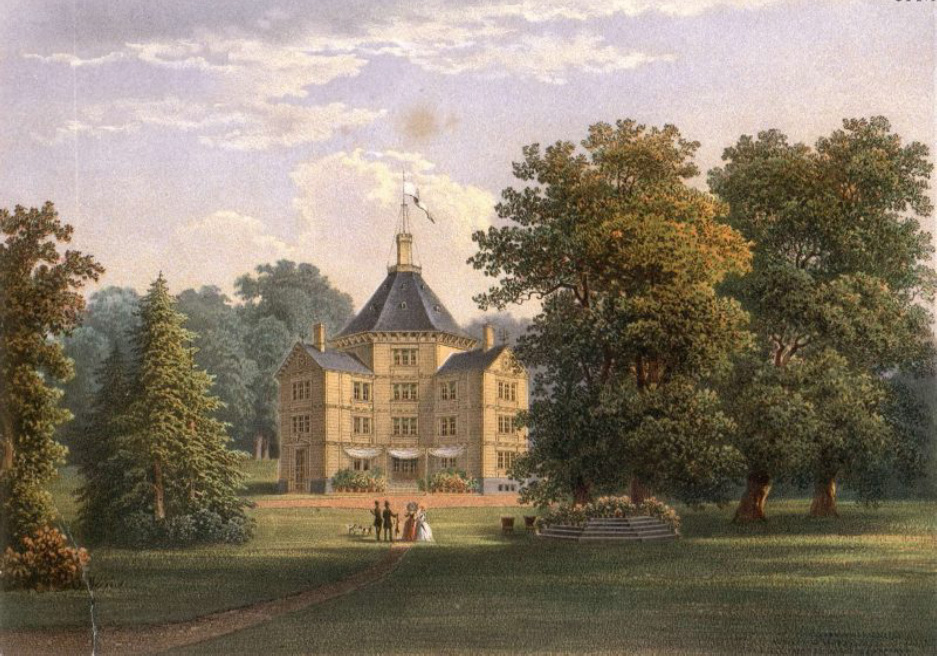
Source: Photograph by R.SHUHAMA, Antonin, 2022.
Material 13: Pałac Antonin, 1912 (Reproduction displayed at Pałac Antonin)
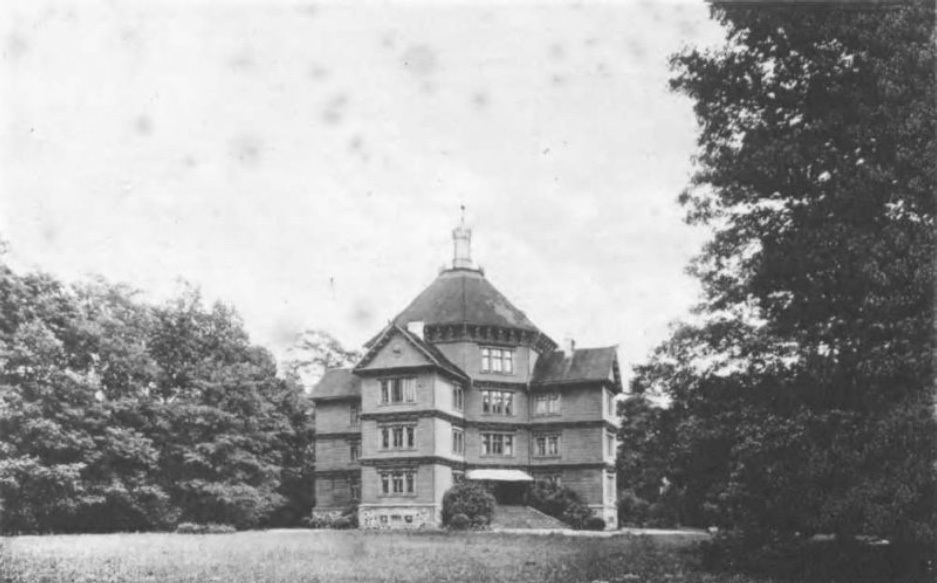
Source: Photograph by R.SHUHAMA, Antonin, 2022.
Material 14: Pałac Antonin, 2022
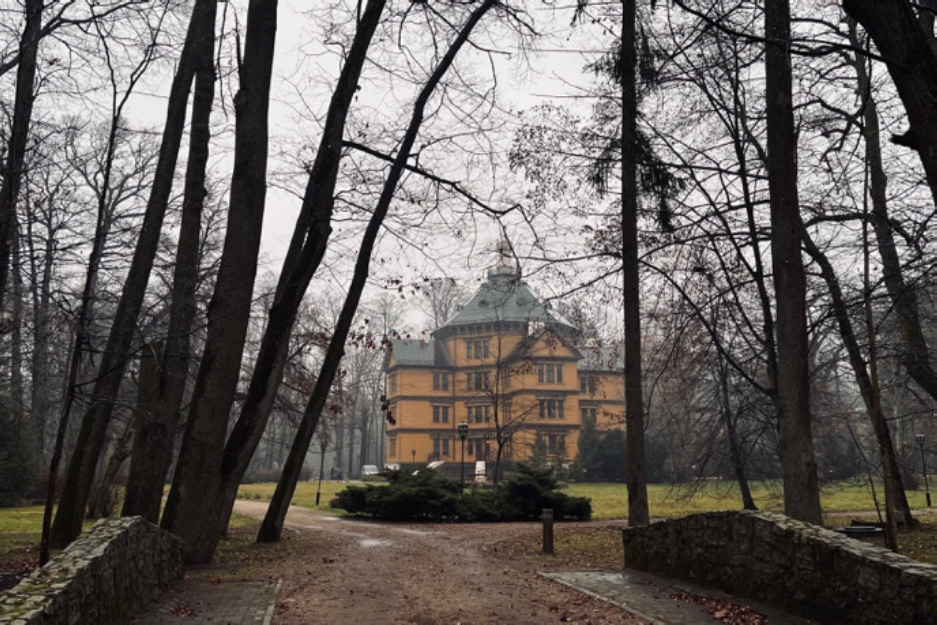
Source: R.SHUHAMA, Antonin, 2022.
Time spent with Radziwiłł’s princesses— Wanda (then 16) and Eliza (then 25)—was so delightful that it helped Chopin put aside thoughts of Konstancja Gładkowska (Zamoyski 2011). During Chopin’s stays in Antonin, Princess Eliza often asked Chopin to play his compositions, such as his Polonaise in F minor, and made two portraits of him. Chopin later wrote, “She did my portrait twice for her album, and, so people tell me, they were good likenesses” (NIFC, 2025). These sketches survived and remain among the most authentic depictions of the young Chopin (Material 15-16).
Material 15: Chopin at the Piano by Princess Eliza Radziwiłł, 1826 (Reproduction displayed at Pałac Antonin)
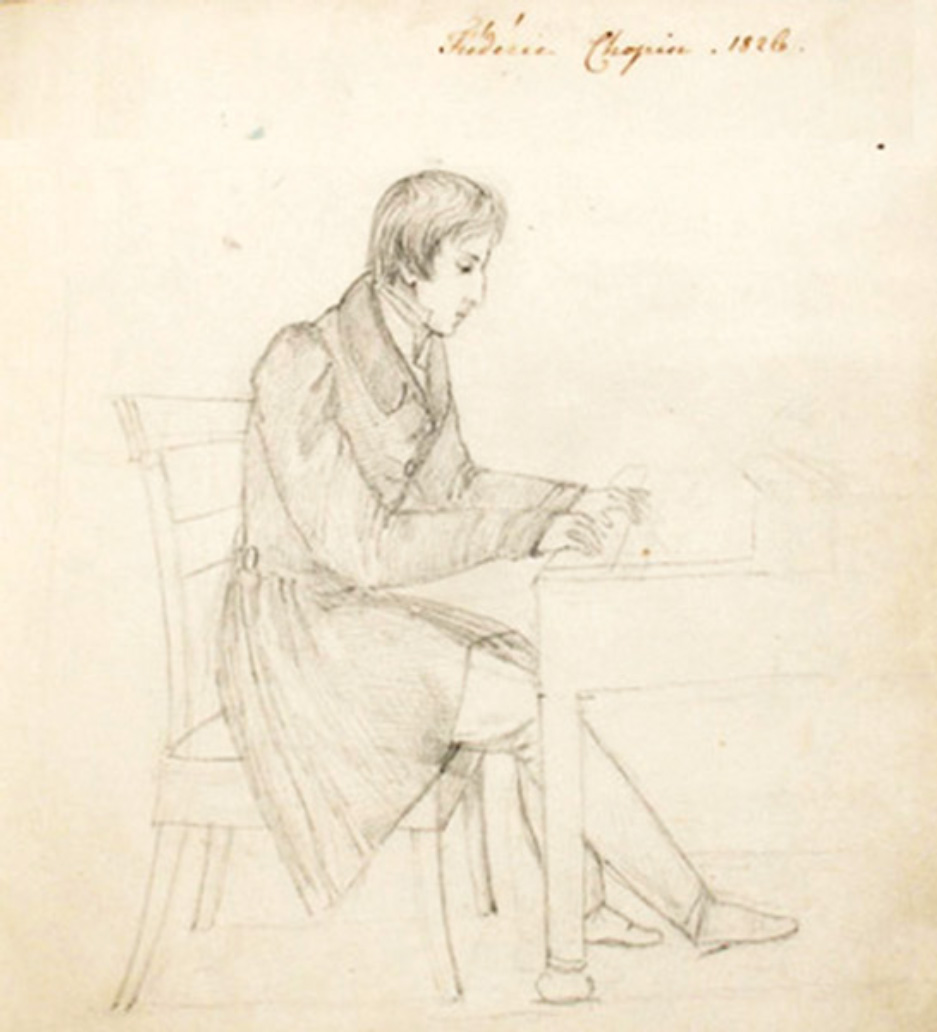
Source: Photograph by R.SHUHAMA, Antonin, 2022.
Although Chopin had a beautiful time in Antonin—calling his stay “paradise”—leaving remarkable outcomes composing new
pieces, he had not yet completed his F minor concerto and eventually returned to Warsaw.
“Tak tu pięknie, że mógłbym zostać, ażby mnie wyrzucili. Księżna gra, książę mruczy basy z upodobaniem – jestem w
raju.” (Chopin, 1829)
“It is so beautiful here that I would stay until they threw me out. The Princess plays, the Prince hums basses
with delight; I am in paradise.” (Translation by the author)
Material 16: Portrait of Chopin by Princess Eliza Radziwiłł (Reproduction displayed at Pałac Antonin)
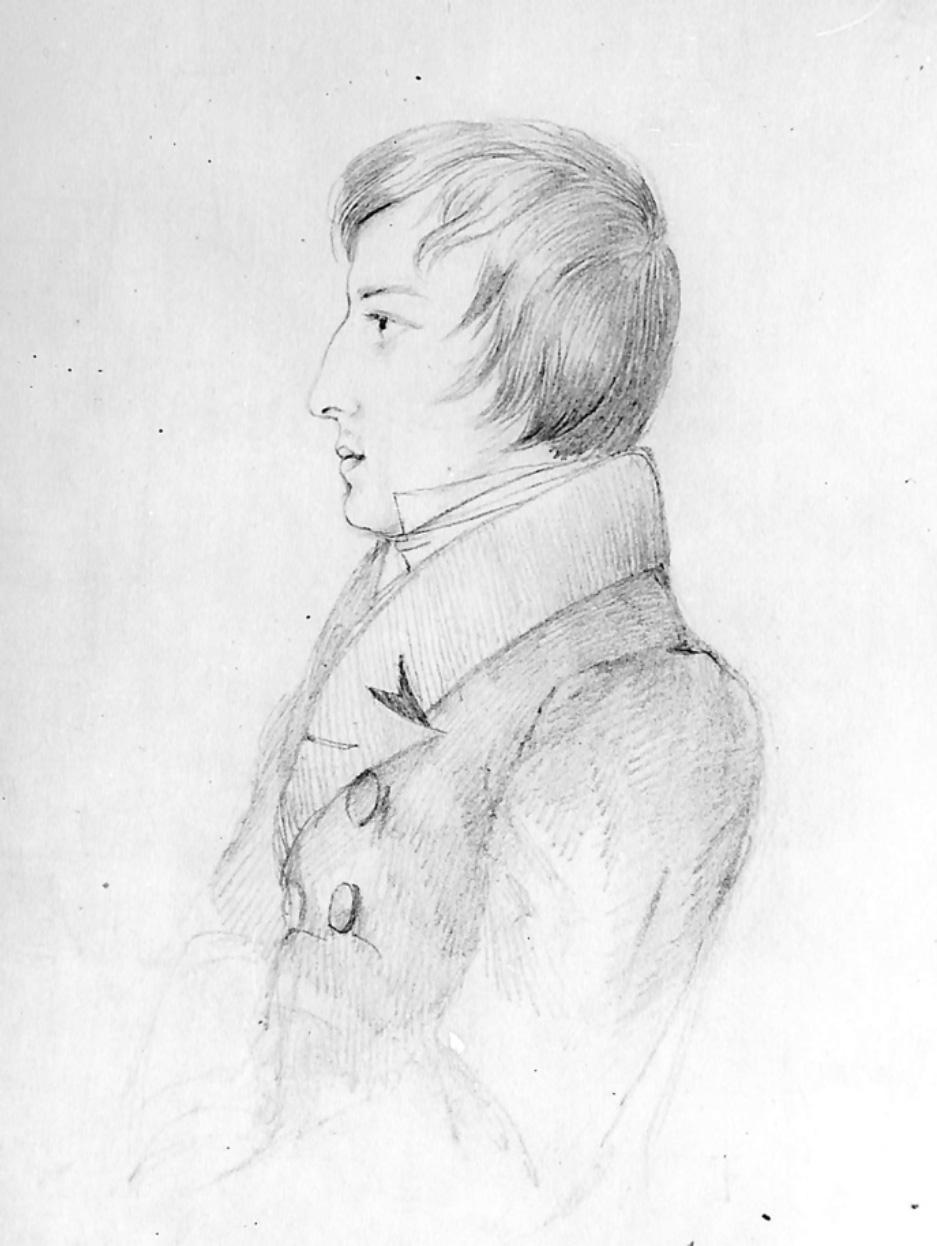
Source: Photograph by R.SHUHAMA, Antonin, 2022.
After World War II, the Antonin estate remained with the Radziwiłł family until its nationalization. Today, it belongs to the Kalisz Centre of Culture and the Arts and serves as the Centre for Creative Work, with a restored music salon (Material 17), displaying period instruments, portraits, and a cast of Chopin’s hand and face. The palace also hosts a cozy café, restaurant (Material 18) and guest rooms, including “Room33” (Material 19)—where Chopin once stayed.
Pałac Antonin remains one of the rare places where Chopin’s joy becomes tangible—a moment of lived harmony that affirms “Chopin was happy” here, and reminds us what SHIAWASE (happiness and fulfillment; Dai-ichi Life, 2025) seeks: the quiet happiness found in creation, bonding, and belonging.
To stay in Antonin today is to complete a circle of resonance—same space, same air, same echoes nearly two centuries later.
Material 17: Music Salon in Pałac Antonin
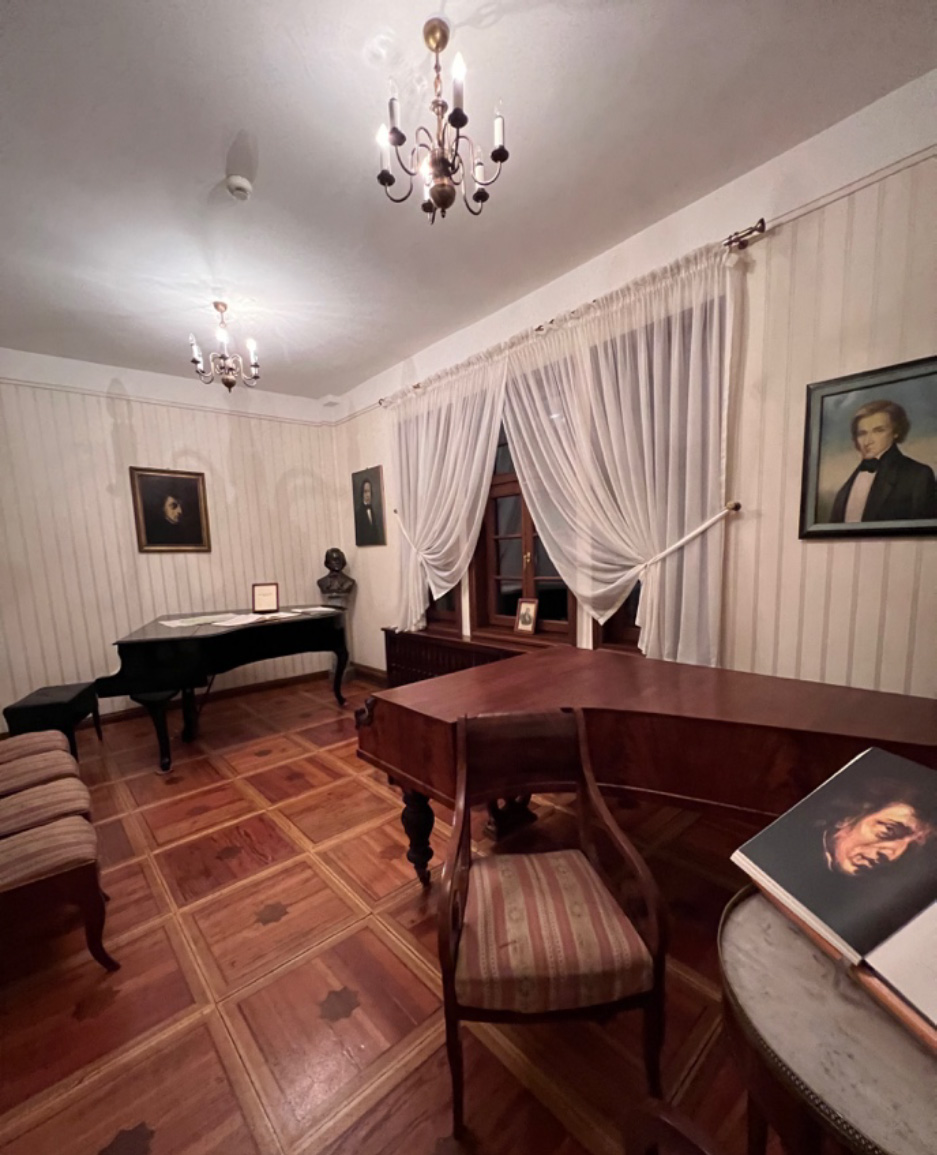
Source: R.SHUHAMA, Music Salon at Pałac Antonin, Antonin, 2022.
Material 18: Interior of Pałac Antonin
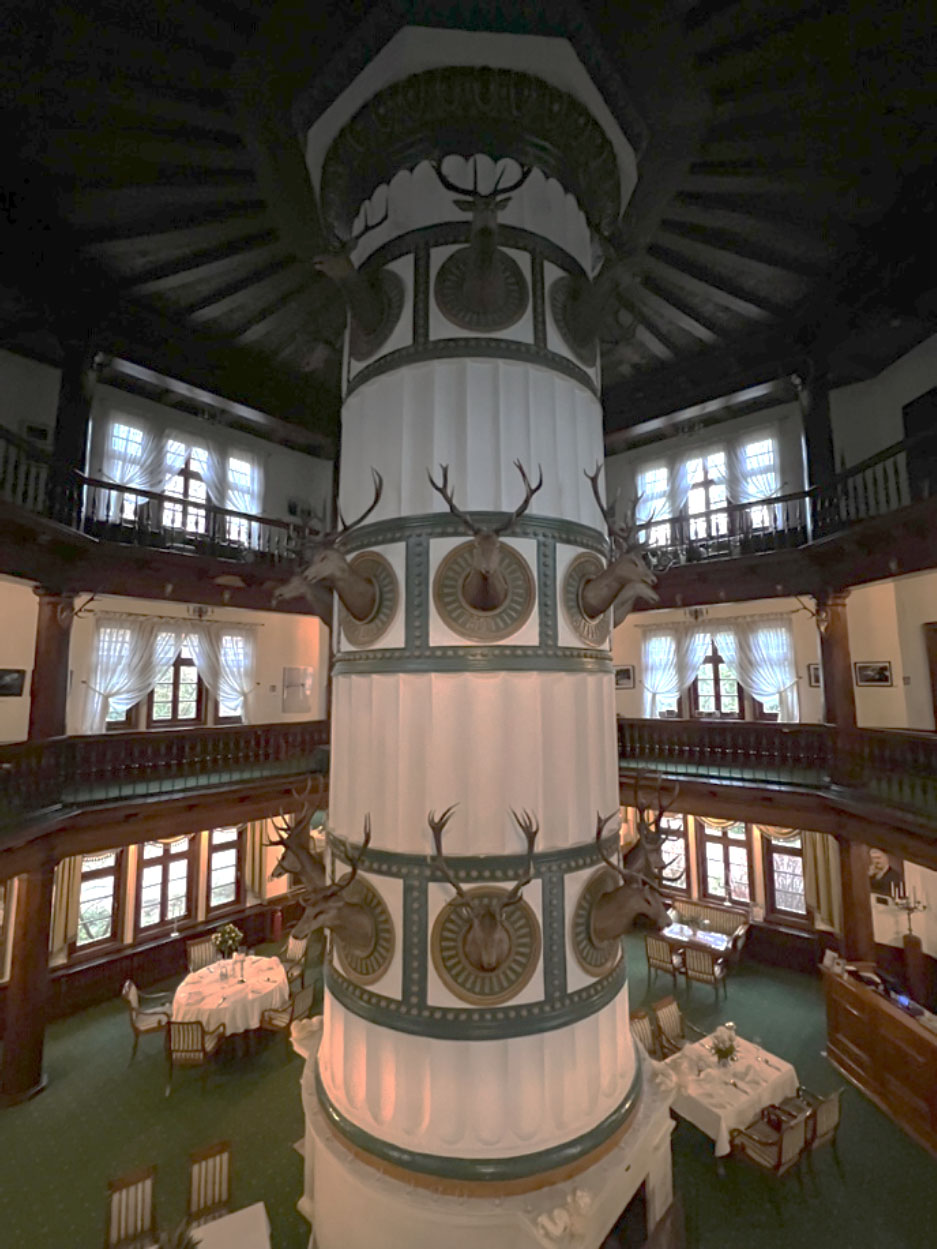
Source: R.SHUHAMA, Pałac Antonin, Antonin, 2022.
Note: Designed by Karl Friedrich Schinkel, the summer hunting palace rests on an octagonal plan forming its four-story core; hunting trophies still adorn the interior today.
Material 19: Room 33—Fryderyk Chopin’s Room
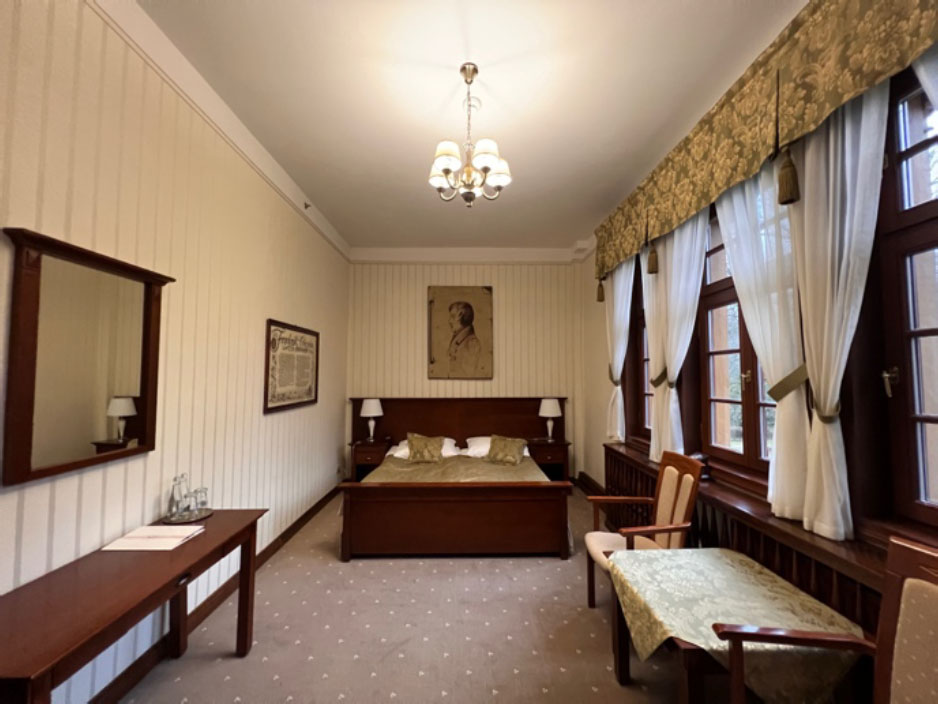
Source: R.SHUHAMA, Fryderyk Chopin’s Room at Pałac Antonin, Antonin, 2022.
(5) Concerto E minor—Departure
Chopin finally completed his first Piano concerto in F minor. Although written in 1829 and premiered in Warsaw on March 17, 1830, it was published later in Paris (1836) and thus became known as “No. 2.” His Piano Concerto in E minor, Op. 11, composed soon after, premiered on October 11, 1830, at the National Theatre (NIFC, 2025). Chopin wrote that he “was not the slightest a bit nervous” and played “as if at home” (Zamoyski, 2011).
Konstancja Gładkowska, Chopin’s secret first love, sang an aria that night “as never before”. For Chopin, it was a moment of fulfillment—a perfect evening. Unbeknownst to him, it would be his final concert in his native land.
Because the E minor concerto appeared in print first, it was designated “No. 1,” though many regard it as the more mature and harmonically refined of the two, with a grander orchestra scope. Chopin wrote both concertos while still in Warsaw, never imagining that nearly two centuries later performing one of them—E minor Op. 11 or F minor Op. 21—with the Warsaw Philharmonic Orchestra would become the ultimate dream for pianists reaching the finals of the International Chopin Piano Competition (Material 20).
Though his first love faded, he could not have known that these concertos would one day symbolize a young artist’s passage from promise to immortality—an echo of his own journey from Warsaw to the world.
Material 20: Eric Lu at the 19th Chopin Competition Final Round
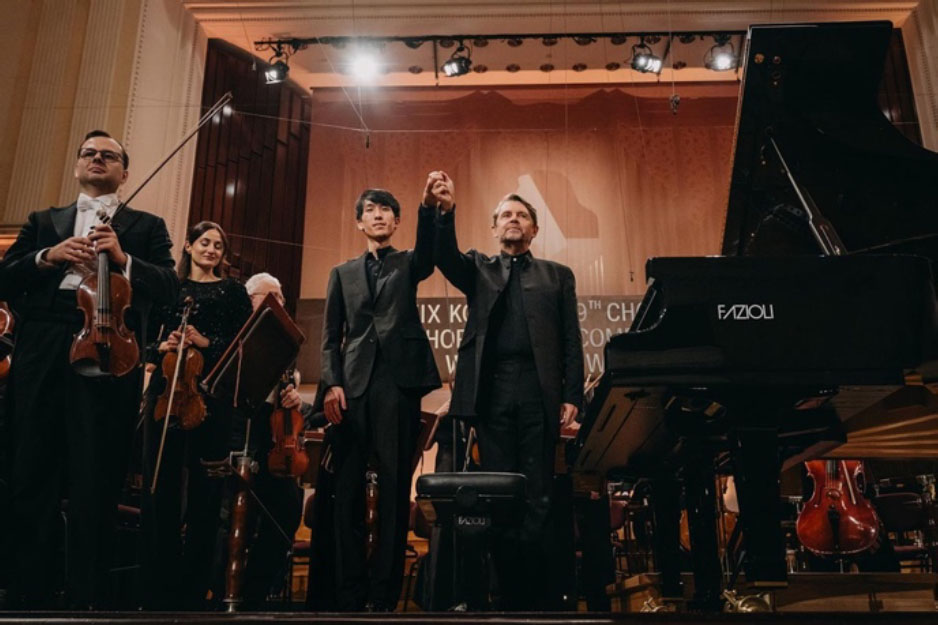
Source: Wojciech Grzędziński / NIFC
The success of Chopin’s first Vienna tour and enthusiastic reception of his concertos encouraged him to broaden his career and artistic mastery. Though Prince Antoni Radziwiłł warmly invited him to Berlin, Chopin delayed his departure, hesitant to leave his homeland. Finally, in November 1830, he resolved to set out for Vienna. On the evening of November 1, his friends and his father Nicolas organized an intimate farewell dinner. They sang, danced, and talked late into the night.
The next morning, on November 2, 1830, Chopin departed Warsaw once again for Vienna. His farewell became unforgettable—teachers, friends, and family gathered at the tollgate tavern in Wola, where his teacher Elsner offered a cantata with lyics by Ludwik Adam Dmuszewski, urging Chopin to carry the memory of his homeland in his heart. Neither Chopin nor his family knew how long he would be away, yet the moment felt prophetic. The farewell cantata opened with the words, “Born in the land of the Poles.” (NIFC, 2025)
(6) Revolution—Vienna to Paris
The November Uprising broke out on November 29, 1830 against Russian rule in the Polish Kingdom. Chopin, who had already left Warsaw for Vienna, received news of the rebellion and its crushing defeat with deep distress. In response to the loss of his homeland and bombardment of Warsaw, he composed the Etude in C minor Op. 10 No. 12 later called the “Revolutionary Etude”—a musical outcry of patriotism and grief (Republic of Poland 2023). Political chaos made returning home impossible. Though longing to join his compatriots, Chopin followed his friend Tytus Woyciechowski’s advice to remain abroad. By autumn 1831, he settled in Paris—unwittingly exiling himself from his beloved Poland forever.
In Paris, Chopin swiftly entered the city’s artistic elite, befriending Franz Liszt, Eugène Delacroix, and other cultural icons (Zamoyski 2011). Yet his heart remained resolutely Polish. His Mazurkas and Polonaises carried the spirit of his homeland—the Mazurka, a lively Polish local folk dance reflecting the rustic vigor of the countryside, the Polonaise, in contrast, originated as a stately processional dance of Polish nobility—slow, proud, and ceremonious—and for Chopin became a symbol of national dignity. Beyond these dance forms, Chopin’s Ballades, inspired by Polish poet Adam Mickiewicz, became “stories for piano” evoking exile, identity, and longing. Through these works, Chopin transformed Polish heart and nostalgia into art.
In September 1835, while visiting Dresden, he unexpectedly reunited with the Wodziński family, Polish acquaintances from Warsaw. Among them was his sixteen-year-old Maria Wodzińska (Material 21), a talented pianist. The last time Chopin had seen her in Warsaw, she was eleven-year-old child; seeing her again as a young woman stirred his heart, blossomed into love. He delayed his return to Paris, spending two weeks with the Wodzińskis in Dresden.
Material 21: Maria Wodzińska (1819-1896) by Józefy Kościelskiej in 1844
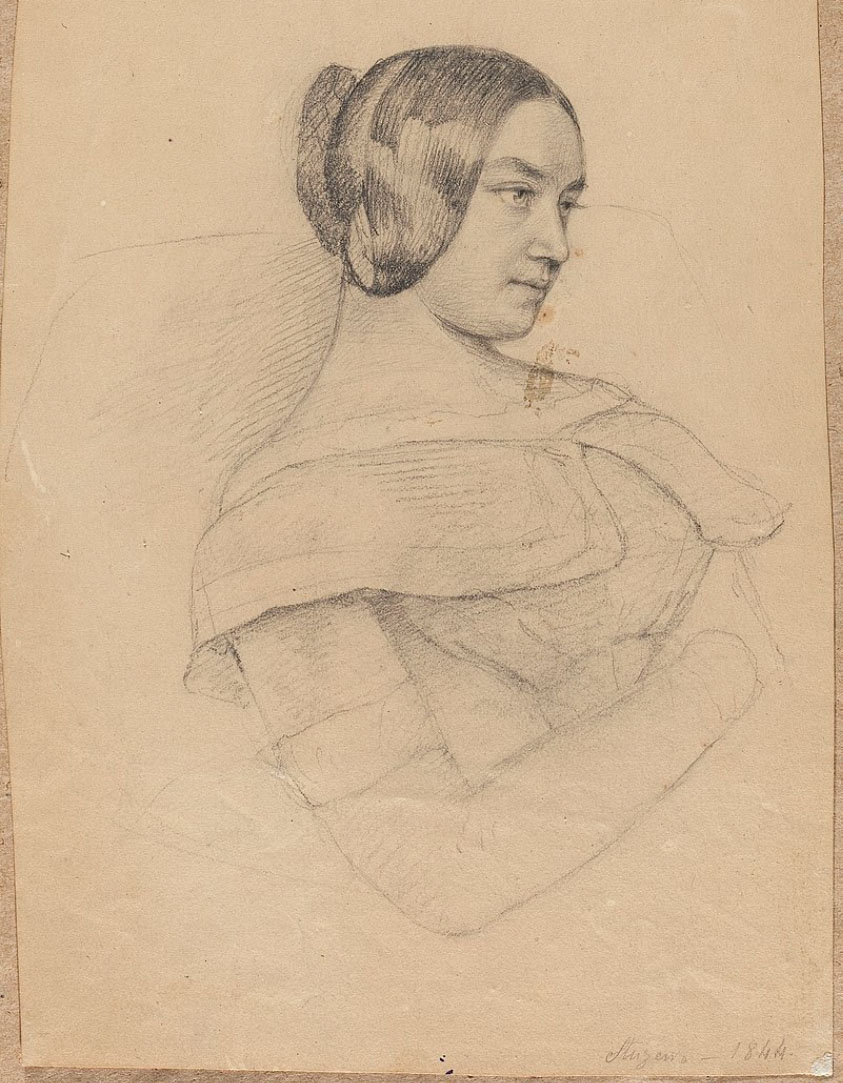
Source: NIFC
In August 1836, Chopin proposed, and the engagement was conditionally accepted. But geography and circumstance intervened: Chopin was tied to Paris; Maria’s family to Warsaw. His frail health, unstable income, and another bout of illness ended their hopes. The engagement quietly dissolved in 1837 (Zamoyski, 2011).
In Paris, Chopin found himself surrounded by a vibrant community of Polish émigré nobles, intellectuals, and artists who became his patrons, students, and friends in Paris. Within this circle, he rediscovered a sense of belonging that softened the ache of exile and anchored his identity as a Pole. Despite living the rest of his life in France, he never described himself as French—always Polish at heart (Zamoyski, 2011).
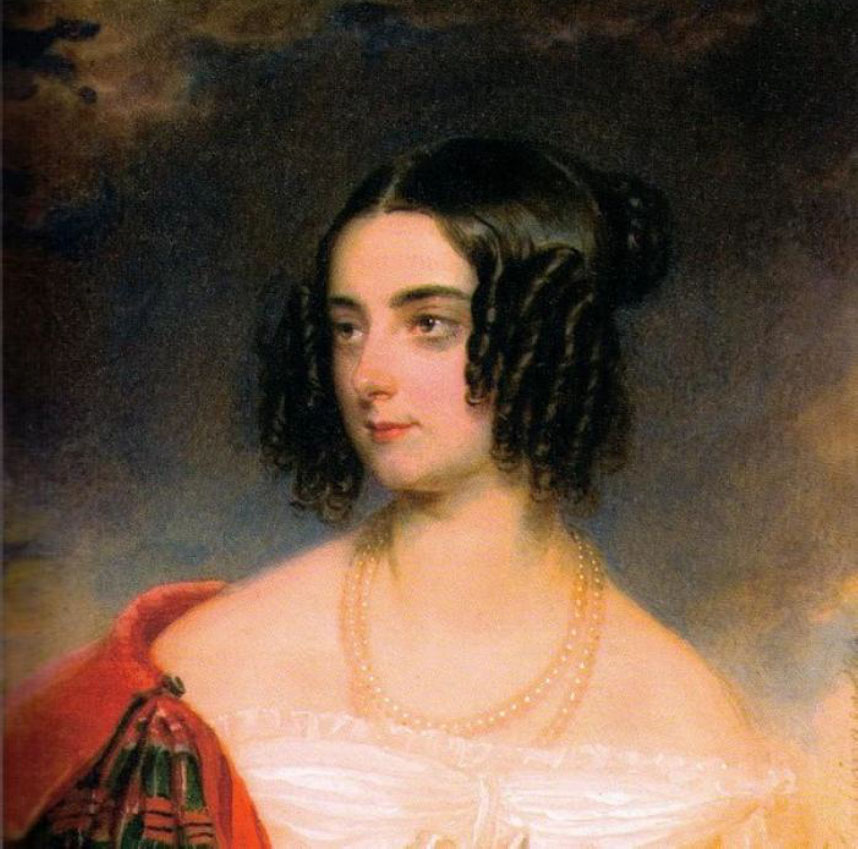
Among his pupils and patrons, Countess Delfina Potocka (Material 22) held a special place. A talented amateur singer and fellow exile, she embodied both his emotional and artistic connection to the homeland. Chopin’s Piano Concerto in F minor, Op. 21, though originally inspired by his youthful affection for Konstancja, was formally dedicated to Potocka upon its Paris publication in 1836—an echo of the romantic and patriotic ideals that intertwined throughout his life. Their relationship, often colored by rumor, appears instead to have been one of deep affection and artistic sympathy, reflected in their lifelong correspondence and shared devotion to Polish culture (NIFC, 2025).
Material 22: Delfina Potocka (1807-1877)
Source: NIFC
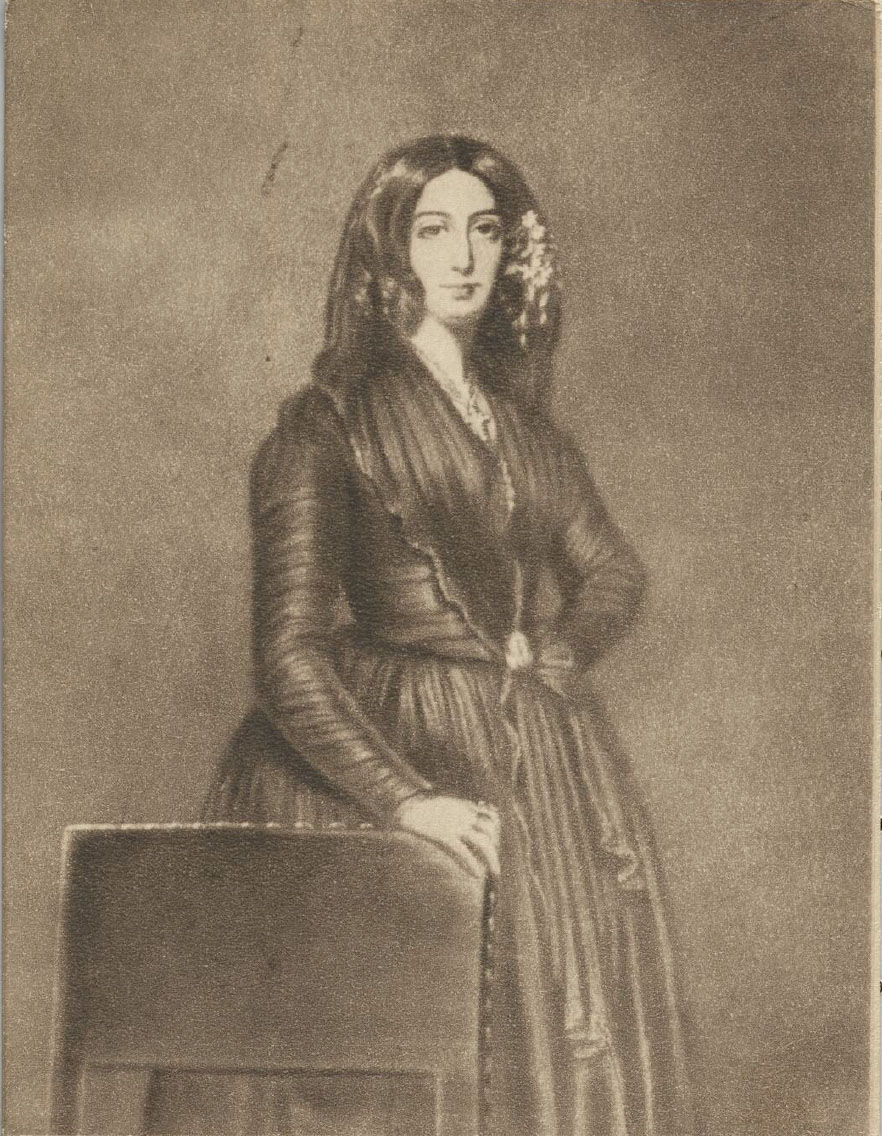
That same year, on October 24 at a salon hosted by Liszt, Chopin met George Sand (pen name of Aurore Dudevant) (Material 23), a celebrated novelist six years older—divorced, a mother of two, and fiercely independent. Her masculine attire and outspoken intellect both unsettled and fascinated Chopin (France Today, 2010). Their ten-year relationship would become a powerful creative alliance but also an emotionally turbulent bond.
Material 23: George Sand (Amandine-Aurore-Lucile Dupin, 1804-1876)
Source: NIFC
(7) Raindrop—Darkness and Light in Valldemossa to Nohant
In November 1838, Chopin and George Sand, accompanied by her two children, travelled to the island of Majorca in search for rest and recovery. At first the Mediterranean air seemed to help—he wrote, “I am better, I breathe more freely.” But as winter set in, their rented villa in Valldemossa turned damp and cold, and his health declined rapidly. The local community, fearful of tuberculosis, ostracized them(NIFC, 2025).
Yet in isolation and illness, Chopin entered one of his most inspired creative phases. Within the stone cells of the former Carthusian monastery, he composed the Preludes, Op. 28 along with the Polonaises, Op. 40, the Ballade in F major, Op. 38, the Scherzo in C-sharp minor, Op. 39, and several Mazurkas, Op. 41 (NIFC, 2025).
The fifteenth Prelude, later called the “Raindrop”, inspired countless legends. During a violent rainstorm, Sand and her children were delayed returning from Palma when their carriage broke down. Alone and feverish, Chopin waited anxiously in the monastery, listening to the rain striking the roof, his imagination turning the sound into visions of drowning. When Sand returned, he cried, “Ah! I knew well that you were dead.” By then he had already transfigured fear into tenderness through music (Sand, 1854).
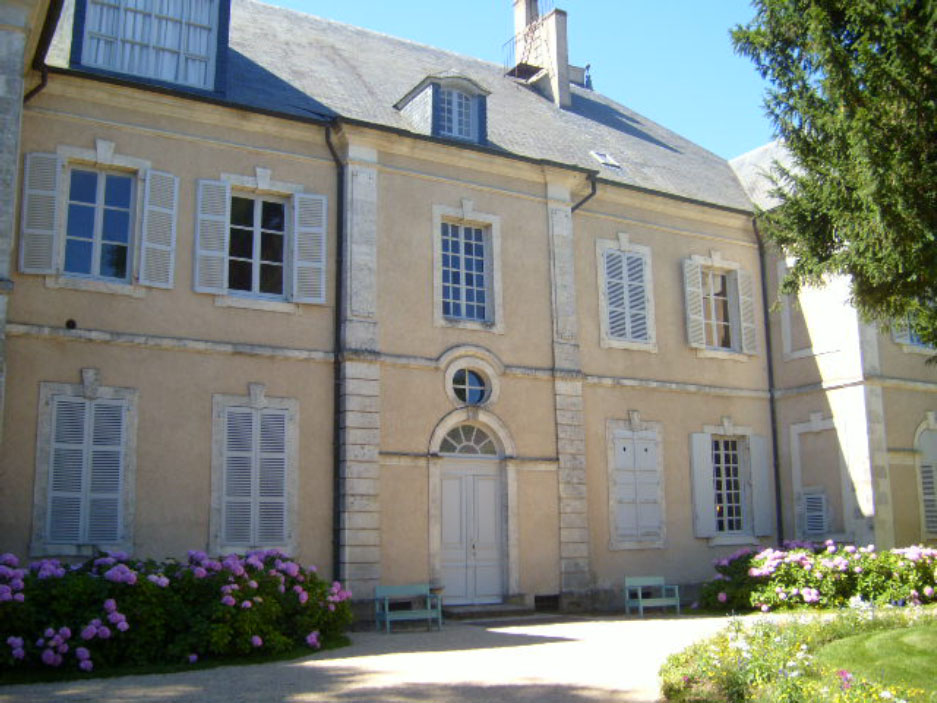
After returning from Majorca, Chopin and Sand resumed their life between Paris and Nohant. Paris was their primary residence, where Chopin taught, performed, and socialized in the salons of the aristocracy and émigré elite. Summers at Sand’s country estate in Nohant (Material 24) offered him calm and stability. Between 1839 and 1846, he composed some of his most refined and introspective works there—Polonaise-Fantasie Op. 61, Barcarolle Op. 60; and numerous nocturnes and mazurkas (France Today, 2010).
In 1844, the death of his father, Nicolas Chopin, deepened his grief, though his creative liaison with Sand continued. After 1845, however, misunderstandings multiplied. Sand’s volatility clashed with Chopin’s frail health and need for solitude.
Material 24: Sand’s Estate in Nohant
Source: Wikimedia Commons / photo by SiefkinDR, CC BY-SA 3.0 (https://creativecommons.org/licenses/by-sa/3.0/)
Note: Its pale symmetry and serenity evoke Chopin’s birthplace in Żelazowa Wola.
In spring 1846, he left Nohant—not in anger, but seeking quiet to work in Paris (NIFC, 2025). Sand, however, wounded and resentful, interpreted his departure as abandonment. Convinced that his affection had shifted toward her daughter Solange, her jealousy and distrust widened the rift (NIFC, 2025). The following summer, in 1847, their ten-year relationship ended in bitterness.
(8) French Revolution—Last Concerts in London and Scotland
Sand’s care had once sustained him; she later described their relationship as “being his nurse for nine years” (NIFC, 2025). Yet their separation was shattering. His strength declined, and the creative wellspring that had nourished him since childhood seemed to run dry. After leaving Nohant, he composed little; illness and loneliness eclipsed invention. The Nocturnes, Op. 62 and the Cello Sonata (1846) became his last works to bear opus numbers.
Even after breaking with Sand, Chopin maintained a close and affectionate bond with her daughter, Solange. Having known her since childhood and shared years together in Majorca and Nohant, he might have regarded her almost as his own—something like the family life fate had denied him. When Solange’s first child was born on February 28, 1848, on March 3, he wrote joyfully: “The birth of your daughter caused me greater joy than the birth of the Republic.”
The next day, on March 4, Chopin met Sand by chance for the final time. He respectfully asked if she had received any recent news from her daughter and found that she had not. Gently, he told her that she had become a grandmother and that Solange was well, adding that he was glad to be the one to share the news. Sand’s reply was cold: “They are fighting in Cracow, and You are not there?” (NIFC, 2025). His friend who took him home that night wrote that Chopin seemed sad and depressed (Zamoyski, 2011). A week later, the infant’s death devastated Solange—and Chopin shared her grief with tenderness and compassion, qualities he found increasingly absent in Sand herself (NIFC, 2025).
On February 22, 1848, revolution erupted in Paris. Chopin tried to maintain his normal routine, but pupils grew
fearful and stopped attending lessons. Street violence and political unrest made daily life increasingly unsafe. As
revolutions spread across Europe, Poland too stirred with renewed patriotic hope. Julian Fontana, one of Chopin’s
closest friends from university now in America, wrote of his desire to fight once again for Poland. Chopin replied to
Fontana, urging patience just as Tytus had once counseled him in 1831:
“…Chłopy galicyjskie dały przykład wołyńskim i podolskim, nie obejdzie się to bez strasznych rzeczy, ale na końcu
tego wszystkiego jest Polska świetna, duża, słowem: Polska.” (Chopin, April 4, 1848)
“The Galician peasants have set an example for those in Volhynia and Podolia; terrible things are sure to occur,
but at the end of all this there will be Poland—magnificent, vast, in a word: Poland.” (Tranlation by the
author)
As the unrest deepened, Chopin felt Paris no longer safe. At the invitation of friends, he decided to leave for England—then seemingly the only peaceful corner of Europe. On April 19, 1948, he departed Paris and arrived in London the following day. Invited by his devoted Scottish Jane Stirling, a wealthy admirer who would soon become his benefactor, Chopin spent seven months in England and Scotland—an artistic honor but a physical ordeal. In London, he performed in elite salons and before Queen Victoria and Prince Albert at Stafford House. Audiences were enthralled, yet his health steadily failed (NIFC, 2025). By late summer, at Stirling’s insistence, he traveled to Scotland, performing in Glasgow, Edinburgh, and smaller towns. Though warmly received, the damp climate worsened his respiratory illness, and constant travel exhausted him. “I feel more dead than alive,” he confessed in letters.
Still, duty triumphed over frailty. His final public concert, at London’s Guildhall on November 16, 1848—a charity event for Polish refugees—ended with thunderous applause. Chopin, frail and coughing, was carried from the stage (NIFC, 2025). A week later, on November 23, he left England and returned to Paris. It was both his last public concert and his last journey.
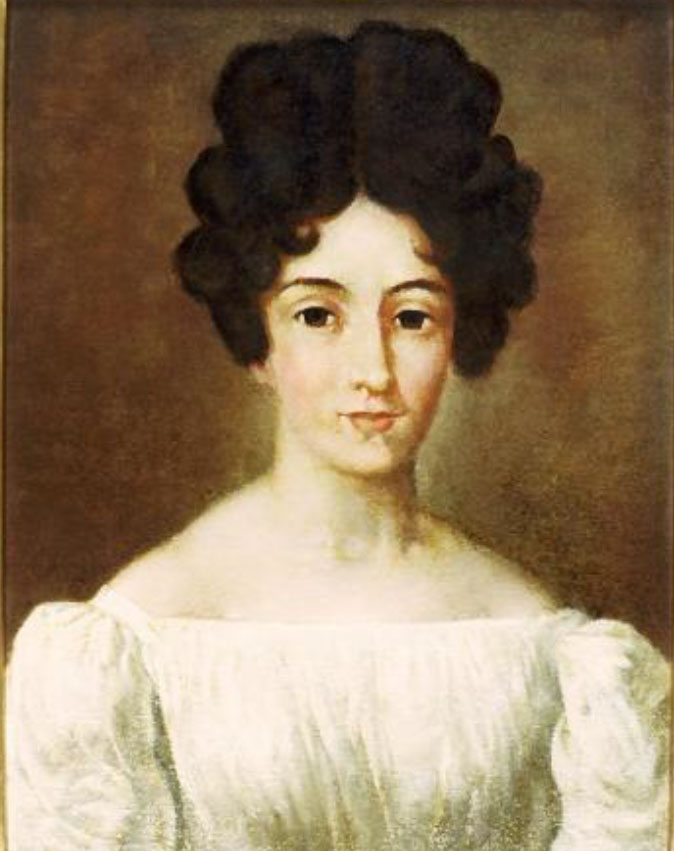
In the months that followed, his health collapsed. He continued to teach a few devoted pupils but spoke constantly of Sand, unable to silence her shadow. On August 9, 1849, his sister Ludwika (Material 25) arrived from Warsaw with her husband and daughter.
Material 25: Ludwika Jędrzejewicz (z d. Chopin) (1807–1855)
Source: NIFC
Ludwika remained in Paris, nursing her “little Fryderyk” with quiet devotion. On October 15, 1849, Delfina Potocka traveled from Nice to visit him—his last pupil, confidante, and friend. At his request, she sang for him one final time. This gesture of loyalty, simple and pure, must have comforted him more than words. Friends gathered around his bed, keep music alive—playing his Cello Sonata and Nocturnes softly in the next room—until Chopin, too weak to listen, whispered: “Leave me alone. Play for me when I am dead.”
(9) Requiem—Return to Warsaw
At 2:00 a.m. on October 17, 1849, Fryderyk Chopin final curtain fell. He was thirty-nine. Only a few closest friends were present—among them Solange Clésinger and his devoted elder sister Ludwika Jędrzejewicz. Solange’s husband made the death mask and hand casts that still preserve Chopin’s delicate features.
Chopin had left explicit instructions for his death. His final wishes were that:
- His heart be removed from his body and returned to the homeland he had longed for—Poland.
- Mozart’s Requiem be performed at his funeral.
- All his unfinished manuscripts be destroyed.
On October 30, at the Church of La Madeleine in Paris, Mozart’s Requiem was sung by the legendary soloists, with the orchestra and choir of the Paris Conservatoire, while Franz Liszt played the organ before a congregation of more than 3,000. George Sand, however, did not attend. His body was laid to rest at Père Lachaise Cemetery—but without his heart. Fulfilling her brother’s wish, Ludwika secretly carried his heart back to Warsaw. It was placed within a pillar of the Holy Cross Church on Krakowskie Przedmieście street in Warsaw, where Chopin’s heart now rests eternally—in the city that once held he prodigy’s happiest days (Material 26-27).
Only one of Chopin’s wishes was left unfulfilled. After his death, Ludwika, together with Jane Stirling, Camille Pleyel and Julian Fontana, prepared posthumous editions of his works. Fontana, defying Chopin’s request to destroy his unfinished manuscripts, published them instead—saving masterpieces that might otherwise have been lost. The only known photograph of Chopin, taken by Louis-Auguste Bisson in Paris a month before his death in 1849, survives today as a poignant yet painful historical document. It is not reproduced here in respect for the image’s private and vulnerable nature.
Material 26: The Pillar where Chopin’s Heart Rest Eternally
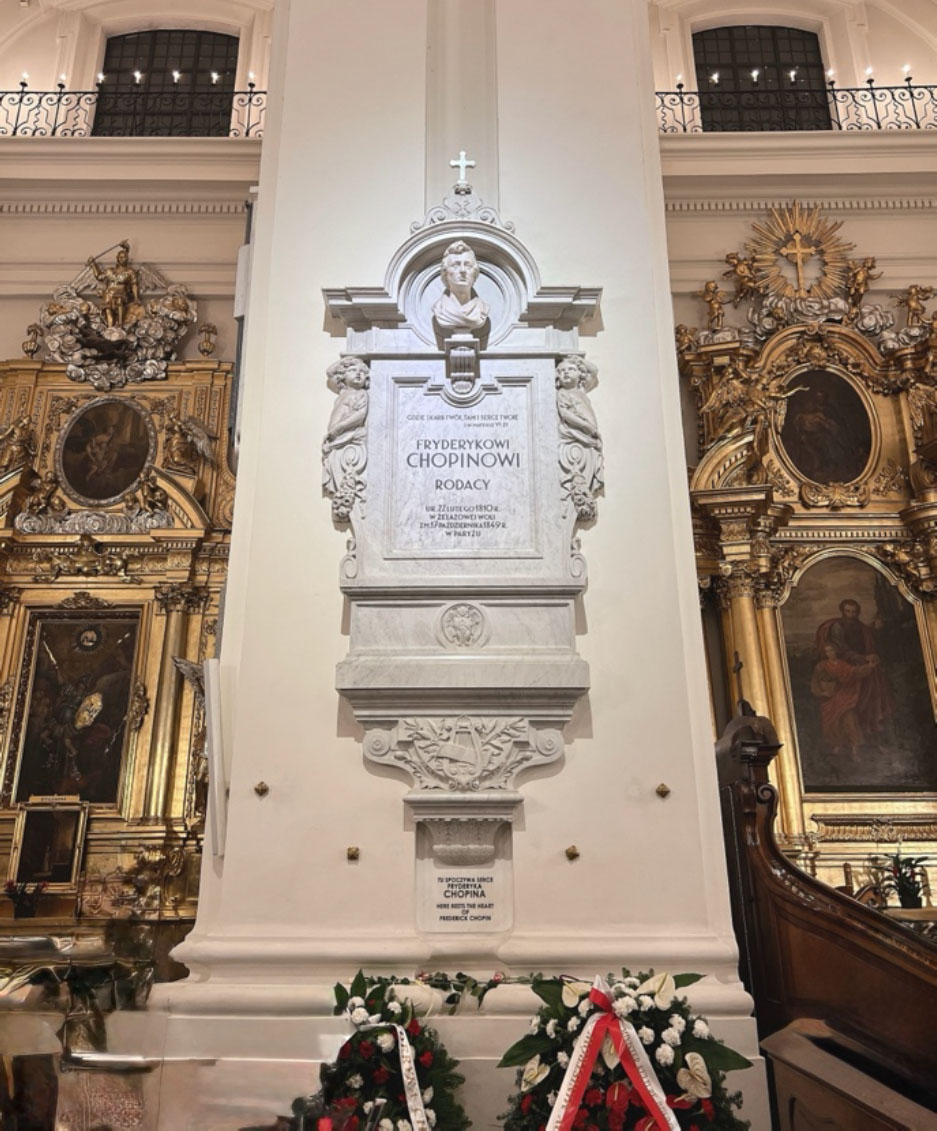
Source: R.SHUHAMA, Holy Cross Church, Warsaw, 2021
Chopin lived twenty years in Warsaw and nineteen years in Paris, yet never again set foot in Poland. Still, exile did not mean separation forever. In August 1835, before his Paris years reached their height, he reunited with his parents in Karlsbad after five long years apart. They spent a month together—the only time he would ever see them again. Drinking dining, embracing: “I am at the height of my happiness!” he wrote (Martinek, 2019). This simple line resonates through history. Read against his lifelong solitude and longing, it assures us that Chopin did know happiness—that for a moment, he was at peace. And in that moment, he was home.
Material 27: The Holy Cross Church
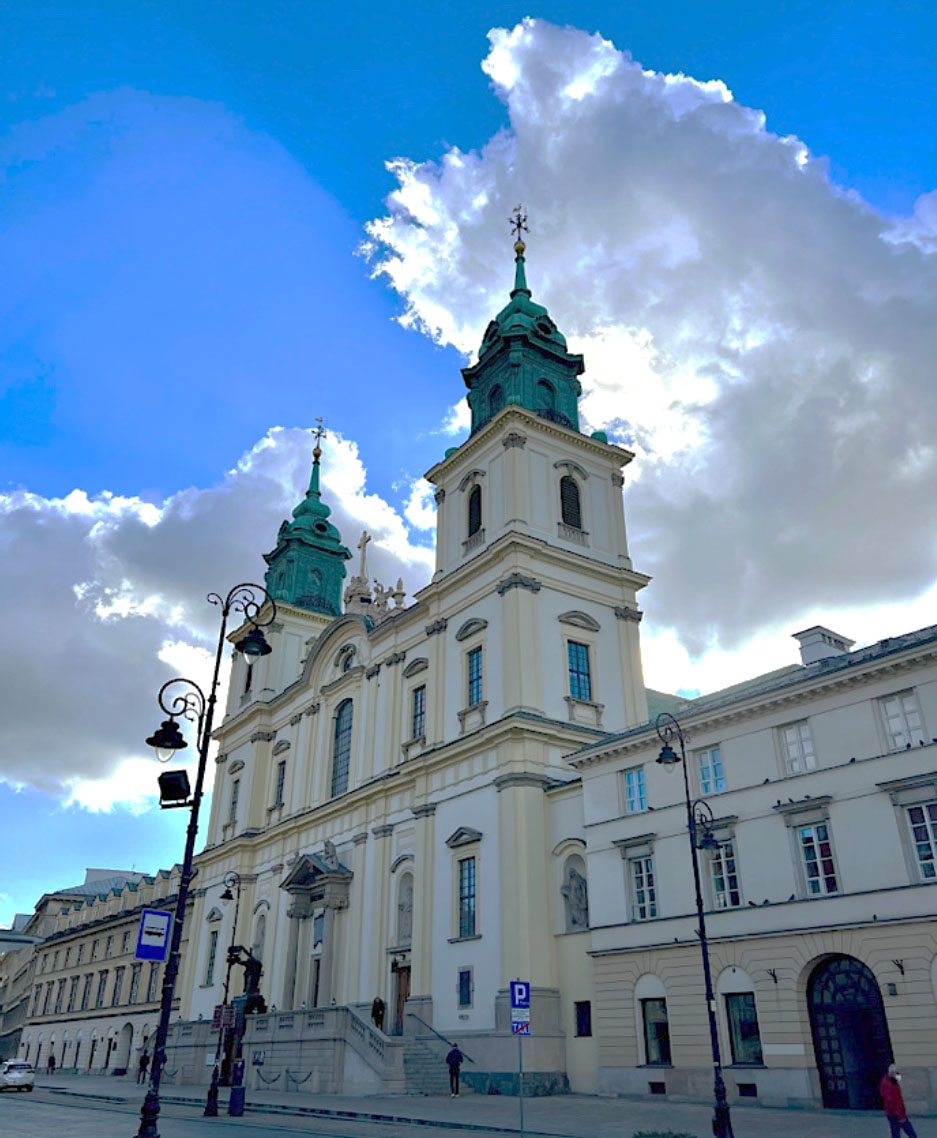
Source: R.SHUHAMA, Warsaw, 2021
Note: Chopin lived with his family in an apartment on the second floor of the annex of the Czapski (Krasiński) Palace, the adjoining building to the Holy Cross Church, from July 1827 until his departure from Warsaw in 1830. The family remained there until 1835.
4. The 19th Chopin Competition—Eric Lu’s Return
The 19th International Fryderyk Chopin Piano Competition in Warsaw drew a record-breaking 642 applicants from around the world. Of these, 162 pianists advanced to the preliminary rounds, and 84 representing 19 countries performed in the main stages (NIFC 2025). The largest group came from China (28 pianists), followed by Poland and Japan (13 each). Other participants included artists from the United States, South Korea, Canada, Chinese Taipei, Italy, Georgia, Malaysia and more (NIFC 2025).
Eric Lu, the winner of the 19th Chopin Competition, returned to Warsaw ten years after earning fourth prize at the 17th edition in 2015. At the time, he was just seventeen—a prodigy stepping from junior competitions onto the world stage. In 2018, aged twenty, he won First Prize and the gold medal at the Leeds International Piano Competition.
There are certain risks for pianists who return to the same competition: a lower placement can endanger a hard-won reputation. Fully aware of those risks, Eric Lu chose to come back to Warsaw in 2025—not for revenge nor for validation, but for rediscovery—to find himself in Chopin’s music and to protect something greater than himself: Chopin’s legacy. As Lu reflected in his interview with Deutsche Grammophon (2025), returning was “I wanted to refresh this (the past achievement), it was a personal challenge. In a way you only live once. This would be my last chance to do it.”
5. Not Spectacle, Not Strategy, but Sanctuary
There are countless ways to experience or interpret a single work of art—and as many ways to create one. As many contestants and laureates have emphasized in their interviews—and as jurors themselves often affirm—Chopin’s music invites infinite interpretations. Every performer reveals a distinct truth, and every listener receives it differently. As Eric Lu remarked in his Deutsche Grammophon interview (2025), “Chopin’s music has a really unique position amongst all the greatest, greatest composers. In Chopin’s case, it has such a direct connection to people on a very fundamental level.”
Yet in a competition, these deeply personal expressions are measured through shared frameworks of technique, structure, and interpretation. Inevitably, there is only one winner, a few laureates, and many whose devotion remain unawarded. At the 19th Chopin Competition, Eric Lu’s return was a historic exception—defined not only by the outcome, but by the artistic depth through which it was earned (NIFC 2025):
- The first American winner in 55 years, since 1970.
- Only the second pianist ever to win performing the F minor Concerto (the previous being Dan Dang Thai in 1980).
- The first contestant in the Competition’s history to return and claim the First Prize
- Recipient of the largest total award in the Competition’s history: €95,000, comprising €60,000 from the President of the Republic of Poland, €20,000 from Orlen S.A., €10,000 from Mast Media Agency, €5,000 from the Mayor of Hamamatsu City, Japan.
This remarkable endowment underscores Poland’s profound reverence for Chopin’s legacy. It reflects not only artistic recognition but also a collective moral commitment to preserving cultural memory, nurturing future generations of interpreters, and illuminating tomorrow through the continuity of Chopin’s art.
Throughout Eric Lu’s performances, what emerged was catharsis: pain and defiance transformed into tenderness and peace. Within his phrasing lived the same paradox that shaped Chopin himself—the fragility that deepens compassion, the darkness that gives birth to light. When Lu’s name was announced as First Prize Winner (Material 28), the quiet serenity on his face seemed to mirror the peace Chopin had sought his entire life.
Material 28: Results Announcement

Source: Wojciech Grzędziński / NIFC
Eric Lu’s playing was an act of preservation: the union of physical precision and spiritual surrender. In giving both body and soul, he reminded the world that the Chopin Competition has never been about spectacle or strategy. At its heart, it remains sanctuary—for Chopin, for his interpreters, and for all who still listen for his heartbeat in the silence between the notes.
Chopin’s public triumphs secured his fame and legacy, yet the moments when he described himself as truly “happy” were not on grand stages, but in intimate spaces—with family in Duszniki-Zdrój, with friends in Antonin, and during his reunion with his parents in Karlsbad. These were moments of belonging—of being seen not as a genius, but as Fryderyk. Even for a figure whose art reshaped the world, happiness did not reside in spectacle or acclaim, but in connection: in creation, intimacy, and continuity. His letters remind us that fulfillment—then as now—lies not in magnitude but in meaning: in the human need to love, to be understood, and to belong.
6. Epilogue—Was Chopin Happy?
Even for those who cannot read music or play the piano, Chopin’s soul transcends all boundaries. His melodies reach the heart regardless of nationality or language, becoming part of people’s own life stories—music that accompanies them quietly through joy and loss, and continues to be played and remembered long after the notes fade. When we listen to Chopin, we do not hear just classical music. We hear fate, sorrow, anger, grief, resistance, longing, loneliness, loss, love and pride. And within his music—even in its deepest darkness—there is always a small light: a light that illuminates our tomorrow, a light that helps us search for who we are.
In his short life, Chopin was not always happy. He suffered illness, wrestled with melancholy, and carried a lifelong ache for homeland, haunted by the thought that he had abandoned it. Yet he did not take up arms, Chopin fought with his fingers—and through his music, he defended the soul of Poland. He turned pain into piano, and music into meaning. Thanks to the hundreds of letters that survive, we know that Chopin certainly had moments of happiness. But—Was Chopin happy?—we will never know.
The 20th Chopin Competition will take place in Warsaw in 2030. Until then, we continue to follow the journeys of the young Chopinists of the 19th edition—just as we follow our own. For every five years the Competition returns, we, too, return—perhaps with new longings, new questions, or new forms of SHIAWASE (Dai-ichi Life, 2025).
If Chopin could see today—hundreds of young pianists devoting their lives to perform in a competition that bears his name; millions of Poles and non-Poles around the world listening to his music across time and place; and during each competition in October, the tradition that there is no competing on October 17 as Mozart’s Requiem is sung at the Holy Cross Church to honor him—he would know that his final wishes are still kept, protected, and revered.
And if someone were to ask, “Are you happy, Mr. Chopin?” he would surely answer, softly but clearly:
“Tak”—Yes.
Editorial Note
This article explores the theme of “SHIAWASE”—happiness and fulfillment in Japanese—through the intersection of history and art. It reflects the author’s interpretive perspective, grounded in her formal conservatory education in piano performance and music therapy in the United States, and informed by her ongoing SHIAWASEspan research at the University of Tokyo. exploring how pursuit of fulfillment, Through the life and music of Fryderyk Chopin, it examines how the pursuit of fulfillment, belonging, and meaning can echo across time.
[References]
- Bruliński, M. (2025, May 16). Chopin and the piano: A few remarks on a person’s relationship with an object. https://doi.org/10.56693/cr.165
- Brudek, P. (2025, October 16). On a mission to save Chopin’s heart in 1944. Warsaw Rising Museum. https://www.1944.pl/en/article/on-a-mission-to-save-chopin-s-heart-in-1944,5690.html
- Chopin, F. (1829, May 15). Letter to Tytus Woyciechowski in Poturzyn. The Fryderyk Chopin Institute. https://chopin.nifc.pl/en/chopin/list/671_to-tytus-woyciechowski-in-poturzyn
- Chopin, F. (1829, October 3). Letter to Tytus Woyciechowski in Poturzyn. The Fryderyk Chopin Institute. https://chopin.nifc.pl/en/chopin/list/664_to-tytus-woyciechowski-in-poturzyn
- Chopin, F. (1988). Chopin’s letters (E. L. Voynich, Ed.). Dover Publications.
- Dai-ichi Life Holdings, Inc. (2025, July 9). The University of Tokyo and Dai-ichi Life Launch Collaborative Research Designing a New Societal Value Axis through Human–AI Collaboration: “SHIAWASEspan”. https://www.dai-ichi-life-hd.com/en/newsroom/newsrelease/2025/pdf/index_021.pdf
- Deutsche Grammophon [@dgclassics]. (2025, October 27). Eric Lu on returning to the Chopin Competition [Video post]. Instagram. https://www.instagram.com/dgclassics/
- France Today. (2010, September 16). Nohant, Indre: Frédéric Chopin and George Sand. https://francetoday.com/culture/music-festivals/nohant_chopin_sand/
- Fryderyk Chopin Institute. (2025). Awards – The 19th International Chopin Piano Competition. https://www.chopincompetition.pl/en/awards?award=all
- Fryderyk Chopin Institute. (2025). Fryderyk Chopin compasitions: Piano Concerto in F minor, Op. 21. https://chopin.nifc.pl/en/chopin/kompozycja/66_piano-concerto-in-f-minor
- Fryderyk Chopin Institute. (2025). Regulations of the 19th International Fryderyk Chopin Piano Competition. https://konkursy.nifc.pl/en/miedzynarodowy/regulamin
- Fryderyk Chopin Institute. (2025). Fryderyk Chopin places catalog: Antonin. https://greatcomposers.nifc.pl/en/chopin/catalogs/places/138_antonin
- Fryderyk Chopin Institute. (2025). Fryderyk Chopin places catalog: Czapski (Krasiński) Palace. https://greatcomposers.nifc.pl/en/chopin/catalogs/places/155
- Fryderyk Chopin Institute. (2025). Fryderyk Chopin places catalog: Duszniki Zdrój. https://greatcomposers.nifc.pl/en/chopin/catalogs/places/132_duszniki-zdroj
- Fryderyk Chopin Institute. (2025). Fryderyk Chopin places catalog: Holy Cross Church. https://greatcomposers.nifc.pl/en/chopin/catalogs/places/157_holy-cross-church
- Fryderyk Chopin Institute. (2025). Fryderyk Chopin places catalog: National Theatre. https://greatcomposers.nifc.pl/en/chopin/catalogs/places/169_national-theatre
- Fryderyk Chopin Institute. (2025). Fryderyk Chopin places catalog: Wieliczka. https://greatcomposers.nifc.pl/en/chopin/catalogs/places/142_wieliczka
- Fryderyk Chopin Institute. (2025). Fryderyk Chopin places catalog: Żelazowa Wola. https://greatcomposers.nifc.pl/en/chopin/catalogs/places/114_zelazowa-wola
- Hogstad, E. E. (2025, January 18). Life of Chopin: The controversial Chopin biography by Liszt. Interlude. https://interlude.hk/life-of-chopin-the-controversial-chopin-biography-by-liszt/
- Hogstad, E. E. (2025, September 26). Life of Chopin: Takeaways from Liszt’s controversial Chopin biography. Interlude. https://interlude.hk/life-of-chopin-takeaways-from-liszts-controversial-chopin-biography/
- Lindstedt, I. (2025, October 19). How the Chopin Competition began: The beginnings of the oldest and most prestigious piano competition in the world. Polish History Museum. https://polishhistory.pl/how-the-chopin-competition-began/
- Liszt, F. (2005). Life of Chopin. Dover Publications. (Original work published 1880)
- Martinek, P. (2019). Literature reflecting on Frédéric Chopin’s visits to the spa towns of western Czechia. Folia Litteraria Polonica, 1(52). http://dx.doi.org/10.18778/1505-9057.52.19
- Michalski, G. (2021, October 3). Chopin Courier, No. 2, p. 6.
- Palac Radziwiłł. (n.d.). History of the Radziwiłł Palace in Antonin. http://www.palacantonin.pl/en/history
- Polskie Radio. (2021, January 7). Maria Wodzińska – podziwiana przez wielkich polskiego romantyzmu. https://polskieradio24.pl/artykul/2653260,maria-wodzinska-podziwiana-przez-wielkich-polskiego-romantyzmu
- Republic of Poland. (2023). Revolutionary Étude: Étude in C minor, Op. 10 No. 12. Ministry of Culture and National Heritage.
- Sand, G. (1854). Story of my life: The autobiography of George Sand. Paris: Michel Lévy Frères.
- SiefkinDR. (2008, August 2). Maison George Sand à Nohant-Vic [Photograph]. Wikimedia Commons. https://commons.wikimedia.org/w/index.php?curid=4489519
- World Federation of International Music Competitions. (2025). Member competitions: The International Fryderyk Chopin Piano Competition. https://www.wfimc.org/
- Zamoyski, A. (2011). Chopin: Prince of the romantics. HarperCollins.
Original in Japanese:
https://www.dlri.co.jp/report/ld/534384.html
Disclaimer:
This report has been prepared for general information purposes only and is not intended to solicit investment. It is based on information that, at the time of preparation, was deemed credible by Daiichi Life Research Institute, but it accepts no responsibility for its accuracy or completeness.